
Reflecting on research: 2025 highlights
December 19, 2025
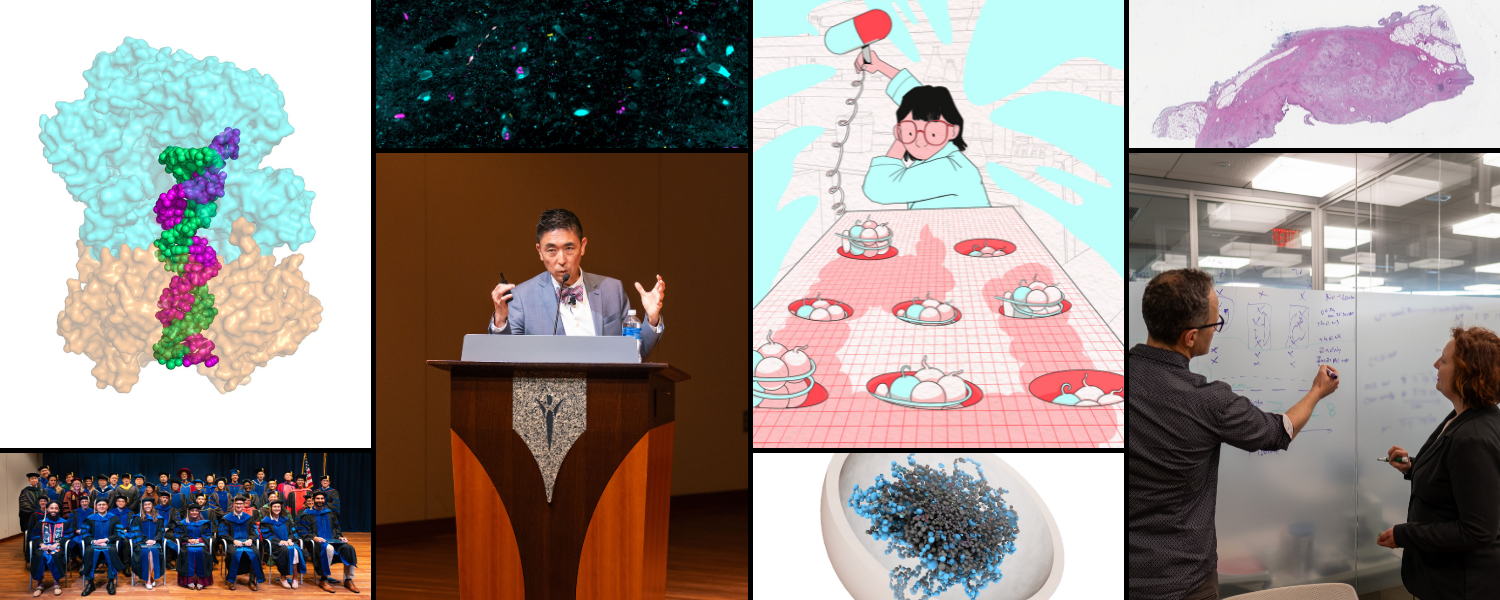
In 2025, VAI continued to build scientific momentum and drive discoveries that deepen our understanding of human health. With the addition of new faculty and progress in research spanning cancer, epigenetics, metabolism, neurodegenerative diseases, structural biology, cell biology and more, the past year underscored the Institute’s enduring commitment to transformative science.
Read below to learn more about our accomplishments in 2025.
Celebrating an era of excellence — and taking the next steps toward the future
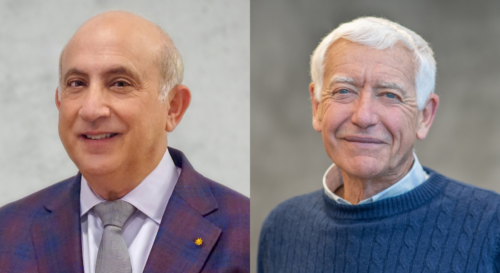
In October, VAI announced the appointment of eminent physician-scientist Dr. Jonathan D. Licht as VAI’s next president and chief scientific officer. He brings to VAI an extensive track record of building successful, high-impact research programs, which will further strengthen the Institute’s efforts to improve the health and enhance the lives of current and future generations.
When he arrives at VAI in early 2026, Licht will succeed current President and Chief Scientific Officer Dr. Peter A. Jones, who was appointed in 2013. Throughout Jones’s exemplary tenure, the Institute has grown into a biomedical research powerhouse and a leader in cancer epigenetics, a field that explores how DNA is regulated without changing the DNA sequence itself. Jones will continue his research as a distinguished professor in the Department of Epigenetics.
Earning global recognition
Over the past three decades, VAI has grown into a world-class research and education organization at the leading edge of innovation. Our reputation for impactful science, inspired education and catalytic collaboration is reflected in a growing number of awards and accolades. This year, VAI was ranked no. 5 among nonprofit/nongovernmental organizations in biological sciences in North America, according to the Nature Index. Globally, we ranked no. 17.
Expanding our research landscape
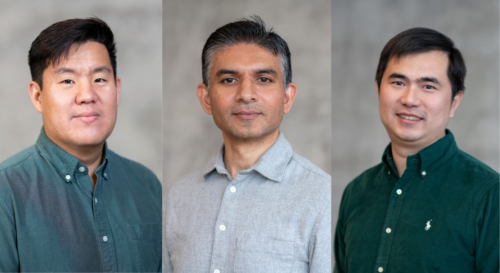
This year, we welcomed three new faculty and their labs. Their outstanding expertise builds upon the Institute’s strong foundation of discovery, innovation and impact.
Josh Jang, Ph.D.
Assistant Professor, Department of Cell Biology
Dr. H. Josh Jang pursues new cancer treatments by studying the interactions between genetics, epigenetics and metabolism in tumors and their surroundings. His research aims to improve cancer immunotherapies so they are effective for more people.
Maulik Patel, Ph.D.
Associate Professor, Department of Metabolism and Nutritional Programming
Dr. Maulik Patel studies how cells handle, store and expend energy, with a focus on how this intricate process, connected with metabolism and nutrition, interacts with other systems to influence health, disease and aging. His research centers on cellular “powerhouses” called mitochondria, which support day-to-day function and, when faulty, contribute to rare, devastating diseases in children and common degenerative conditions in aging adults.
Bang-An Wang, Ph.D.
Assistant Professor, Department of Neurodegenerative Science
Dr. Bang-An Wang develops new technologies to explore the epigenetic underpinnings of brain development and neurodegenerative diseases. His multi-faceted research brings together powerful techniques to illuminate potential future treatment targets.
In addition to recruiting new faculty, we also celebrated several VAI scientists who were recognized for their exceptional research:
- Nick Burton named as Pew Scholar in Biomedical Sciences ➔
- Hui Shen elected to the American Institute for Medical and Biological Engineering College of Fellows ➔
- Travis Walton awarded prestigious Sloan Research Fellowship ➔
- Russell Jones named to Highly Cited Researcher’s list ➔
Supporting clinical trials
Clinical trials are essential steps in turning scientific breakthroughs into potential new treatments. VAI champions this mission by supporting two large-scale initiatives: the Cure Parkinson’s–Van Andel Institute International Linked Clinical Trials Program and the Van Andel Institute–Stand Up To Cancer® Epigenetics Dream Team.
Cure Parkinson’s–Van Andel Institute International Linked Clinical Trials Program:
The International Linked Clinical Trials Program seeks to identify potential new therapies for Parkinson’s disease from drugs approved to treat other conditions. In December, Cure Parkinson’s and VAI reaffirmed our support for this game-changing initiative by announcing a three-year co-funding agreement. We also celebrated the launch the largest-ever clinical trial of potential treatments to slow or stop the progression of Parkinson’s disease. In February, results of a phase 3 Parkinson’s disease clinical trial of a repurposed diabetes drug published. While the outcome was not what we hoped for, the findings still provide valuable insight that can guide future studies and suggest new opportunities.
- Van Andel Institute, Cure Parkinson’s renew funding for Parkinson’s clinical trials program ➔
- Largest-ever Parkinson’s disease clinical trial opens ➔
- After recent exenatide results, what’s next in Parkinson’s disease research and clinical trials? ➔
Van Andel Institute–Stand Up To Cancer® Epigenetics Dream Team:
Comprising leading scientists and clinicians, the VAI–SU2C Epigenetics Dream Team funds groundbreaking clinical trials that combine epigenetic medications with other cancer therapies. Our goal? To find a one-two punch that tackles cancers on multiple fronts. To date, the team has launched 15 clinical trials that have included more than 800 participants. In 2025, the team launched a new trial that is evaluating if combining the epigenetic drug ladademstat with immunotherapies can treat small cell lung cancer (learn more at clinicialtrials.gov).
Connecting with our community
VAI connects with our West Michigan community and beyond through our annual Public Lecture Series. These free, hour-long talks are a great way to hear the latest research breakthroughs and teaching trends.
- The building blocks of brain cells ➔
- Are sound waves the next big cancer breakthrough? ➔
- Using inquiry-based learning to build future innovators ➔
- How backyard microbes could help treat disease ➔
- The promise of gene editing with CRISPR ➔
If you would like more info about our upcoming 2026 lecture series, please visit vai.org/pls ➔
Making moves in metabolism
Scientists in our Department of Metabolism and Nutritional Programming explore the nuts and bolts of metabolism and its wide-ranging implications for health and disease. This year’s revelations include insights into how immune cells and cancer cells use nutrients as fuel, a look at how metabolism functions in the earliest stages of development, and advances that may improve cancer treatment.
- Cancer cells use backup routes to fuel their growth ➔
- A clearer view: How a commonly studied gene impacts more than eye color in fruit fly research ➔
- Study offers high-resolution look at ‘metabolic handoff’ from fruit fly mothers to embryos ➔
- What’s next in metabolism research? ➔
- ‘Sweet’ discovery reveals how glucose fuels cancer-fighting immune cells ➔
- Reducing inflammation may offer new path for treating Peutz-Jehgers syndrome, GI cancers ➔
- Releasing a molecular ‘brake’ may help immune cells better fight cancer ➔
- Harnessing the immune system to combat cancer: A Q&A with Postdoctoral Fellow Dr. Michael Dahabieh ➔
- Study reveals how dietary restriction helps fuel cancer-fighting immune cells ➔

Unlocking the hidden switches of genetics
Epigenetics is a complex set of processes that determine how and when the instructions in our genes are used. Scientists in our Department of Epigenetics seek to understand how epigenetic changes either protect us from or predispose us to diseases such as cancer, Parkinson’s and metabolic disorders.
In 2025, VAI scientists developed a new resource that improves their ability to study cancer, explored how epigenetic errors may influence kidney disease and pinpointed how epigenetics may influence cancer risk — even before birth.
- New ‘atlas’ may aid search for markers of early-stage ovarian cancer ➔
- DNA ‘organizer’ helps cells store and access genetic information ➔
- Van Andel Institute scientists develop technique for high-resolution single cell epigenetic analysis ➔
- Using viral mimicry to help the immune system see — and fight — cancer ➔
- Cellular mix-ups can set the stage for kidney disease ➔
- Pinpointing weaknesses in cancer’s armor ➔
- Cancer risk established before birth ➔
- New resource available to help scientists better classify cancer subtypes ➔

Studying the structures that hold life together
Every aspect of life relies on structure for protection and support: the skeletal system of the human body, the frame of a house, the binding of a book. Without these basic building blocks, they would not be able to do their jobs. The same goes for the cells and molecules that make us — and that’s why scientists in our Department of Structural Biology study how the shapes of these tiny yet vital components influence health and disease.
This year, VAI scientists continued to deepen our understanding of fundamental biological processes by exploring the inner workings of DNA’s “proofreading” system, the mechanisms through which the antibiotic neomycin enters cells, and the role of a particular protein in preventing the formation of Alzheimer’s-related plaques.
- Midkine proteins prevent Alzheimer’s-related plaques ➔
- A sticky situation: How a molecular ‘adhesive’ may be the key to making an antibiotic more effective ➔
- Cryo-EM reveals never-before-seen look at the ‘proofreading’ proteins that safeguard DNA ➔

Mapping the biological roots of neurodegeneration
Scientists in our Department of Neurodegenerative Science study how neurodegenerative diseases like Parkinson’s and Alzheimer’s arise and progress. This year, VAI scientists uncovered how an unstructured layer surrounding the protein tau contributes to Alzheimer’s progression. Others are unpacking the mechanisms that give rise to amyotrophic lateral sclerosis (ALS) disease in hopes of finding new therapeutic targets.
In addition to conducting critical research, the Institute hosts several neurodegenerative disease-focused events to educate and connect those in the field. Our annual Grand Challenges in Parkinson’s Disease symposium and Rallying to the Challenge meeting, hosted with Cure Parkinson’s, brought together scientists and people with Parkinson’s to discuss the latest Parkinson’s disease research. In February, early-career scientists at VAI and Michigan State University hosted the second annual Winter Neurodegeneration Summit to discuss their research and network with others.
- Highlights from Grand Challenges in Parkinson’s Disease 2025 ➔
- 3 questions for ALS expert Dr. Qiang Zhu ➔
- University of Minnesota, Van Andel Institute receive two-year, $5.8M grant to study Parkinson’s disease and cellular senescence ➔
- 2025 Winter Neurodegeneration Summit: What’s on the horizon in neurodegeneration research? ➔
- Not just a harmless accessory, tau’s ‘fuzzy coat’ contributes to Alzheimer’s progression ➔

Uncovering cellular clues to cancer and rare diseases
Cell biology is the study of how cells function and behave. Scientists in our Department of Cell Biology explore how these fundamental units of life interact with their environment and how problems with these important processes contribute to disease. In the past year, VAI scientists developed a new method to identify and better classify pancreatic cancer cell subtypes based on sugars found on the outside of cancer cells. Others identified a mechanism that may explain how aging promotes osteoarthritis. Excitingly, an experimental test developed by VAI and University of Pittsburgh scientists to detect pancreatic cancer is undergoing additional clinical evaluation — a critical step toward potential use in the doctor’s office.
- ‘Sugar’ signatures help identify and classify pancreatic cancer cell subtypes ➔
- Could silencing old viruses help treat osteoarthritis? ➔
- Experimental blood test for pancreatic cancer undergoing clinical development and evaluation ➔

Preparing future leaders in biomedical research
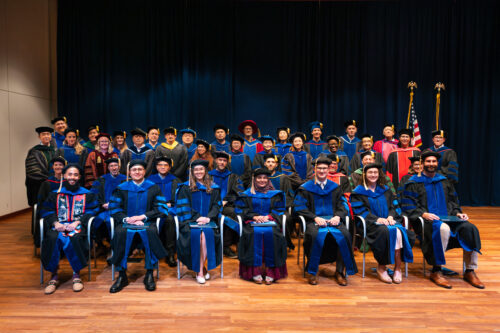 VAI Graduate School’s Ph.D. in molecular and cellular biology is a research-intensive, interdisciplinary program that prepares students for successful careers as independent investigators. In recognition of the important work they are doing, VAI graduate students earned prestigious awards from the American Society of Hematology and the National Cancer Institute. The Graduate School celebrated a pair of milestones this year — we welcomed our largest incoming student cohort and celebrated our biggest number of graduating students in a single year. Sixteen new students joined the program, and nine students earned their Ph.D.s.
- VAI graduate student earns prestigious American Society of Hematology award ➔
- Fighting to outsmart cancer: A Q&A with graduate student Yanqing Liu ➔
As we move into 2026, VAI remains committed to expanding the frontiers of biomedical research and training the next generation of scientists. With the continued support of our community and collaborators, we look forward to building on this momentum and contributing to breakthrough treatment strategies for cancer, Parkinson’s and other diseases.