


Amyotrophic lateral sclerosis (ALS) is a neurodegenerative disorder that damages movement-regulating nerve cells in the brain and spinal cord. Overtime, the loss of these neurons causes muscle weakness, which leads to difficulties with eating, sleeping and breathing.
In most cases, the cause of ALS is unknown. Only about 10% of cases are considered familial, meaning the disease is inherited through genetic changes passed down through families. The remaining 90% of cases are classified as sporadic, where a combination of genetic and environmental risk factors may contribute to disease development.
This variation makes it challenging to develop therapies because no one case is the same. Current treatment options primarily focus on managing symptoms and improving quality of life.
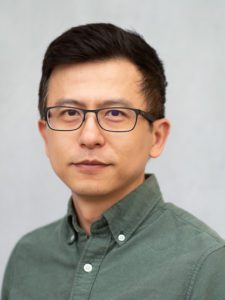
“ALS is a complex disease — there’s still a lot we don’t know,” said Assistant Professor Dr. Qiang Zhu, whose research at Van Andel Institute focuses on ALS. “There is an urgent need for treatments that target the fundamental factors that cause the disease, and that starts with understanding what happens at the biological level.”
Learn more about ALS research at VAI ➔
As one of the only labs dedicated to ALS research in West Michigan, Zhu works to find new therapies for ALS by investigating how and why the disease occurs.
Specifically, his lab studies the C9ORF72 gene, the most common genetic cause of ALS. In some people with ALS, part of this gene contains an incorrectly repeated DNA sequence known as a “repeat expansion.” This change disrupts cellular function and leads to an accumulation of harmful proteins. Over time, this buildup causes nerve cells that control muscle movement to degenerate, resulting in progressive muscle weakening.
A major area of focus for the Zhu Lab is developing new gene therapies, which work by directly “fixing” changes in genes like C9ORF72 that can trigger disease, or by reducing inflammation caused by overactive immune cells that contribute to disease progression. This type of treatment is promising because it addresses the roots of ALS.
“Since starting at VAI, my lab has been working to develop new tools and techniques that help us more precisely study ALS and evaluate potential treatments,” Zhu said. “Our goal is to design new therapeutic strategies that target the underlying biological drivers of ALS and improve quality of life.”