event tracking

Amyotrophic Lateral Sclerosis

Propelling breakthroughs in amyotrophic lateral sclerosis (ALS) research

Amyotrophic lateral sclerosis (ALS), also known as Lou Gehrig’s disease, is a neurodegenerative disorder that damages nerve cells in the brain and spinal cord. It causes muscle weakening that worsens over time and eventually leads to difficulties with movement, eating, speech and breathing.

About 10% of ALS cases are familial, meaning they are linked to genetic changes passed down through families. The remaining 90% of cases are considered sporadic, and likely are caused by a mix of genetic and environmental factors.

There is no cure for ALS and treatment options are limited. Our scientists pursue breakthroughs to improve ALS treatment by:

  • Investigating the C9ORF72 repeat expansion, the most common genetic cause of ALS
  • Studying how genetics, epigenetics and cell-to-cell interactions influence movement-related and cognitive symptoms in ALS
  • Leveraging induced pluripotent stem cells (iPSCs) to study how ALS develops and evaluate potential new therapies

Support VAI

What do ALS researchers at VAI study?

Scientists at VAI investigate how ALS begins and progresses with the goal of identifying new, more effective treatments.

Investigating the C9ORF72 repeat expansion, the most common genetic ALS cause

C9ORF72 is a gene that helps cells remove and recycle waste. In some people, part of this gene contains an incorrectly repeated DNA sequence. This “repeat expansion” disrupts normal cell function and results in a harmful buildup of toxic proteins and debris.

Over time, this damage leads to the death of cells that control muscle movement, causing the progressive muscle weakening seen in ALS. Repeats in C9ORF72 are the most common cause of genetic ALS. The C9ORF72 repeat expansion also influences sporadic ALS, which occurs in people without a family history.

VAI scientists study how the C9ORF72 repeat expansion contributes to both inherited and non-inherited ALS, with the goal of developing improved therapies that target this critical gene variant. This research also may help us understand other diseases linked to C9ORF72, such as frontotemporal dementia.

Studying how genetics, epigenetics and cell-to-cell interactions influence movement-related and cognitive symptoms in ALS

An estimated 90% of ALS cases are sporadic, meaning there is no family history of the disease. Research suggests that these cases likely arise from a mix of factors, including genetics, interactions between cells, and epigenetics, which regulate how and when the instructions in genes are used.

Developing new ways to treat ALS requires an in-depth understanding of all the factors that contribute to the disease. VAI scientists investigate these interconnected mechanisms with the goal of designing more effective treatments and identifying biomarkers to improve diagnosis and disease monitoring.   

Leveraging induced pluripotent stem cells (iPSCs) to study how ALS develops and evaluate potential new therapies

Induced pluripotent stem cells (iPSCs) are derived from mature cells, such as those from the blood or skin, that are “reprogrammed” in the lab to return to an earlier, blank-slate state. From there, they can be transformed into other types of cells, such as brain cells, making them powerful tools for studying diseases like ALS.

VAI scientists use iPSCs to create human brain cells and “mini brains” in petri dishes that enable detailed study of how ALS impacts cells and testing of potential new therapies in the lab.

By the numbers

Amyotrophic Lateral Sclerosis

35K

An estimated 35,000 people in the U.S. have ALS*

5K

About 5,000 new cases are diagnosed each year*

40

More than 40 genes have been linked to ALS risk**

VAI scientists who study ALS
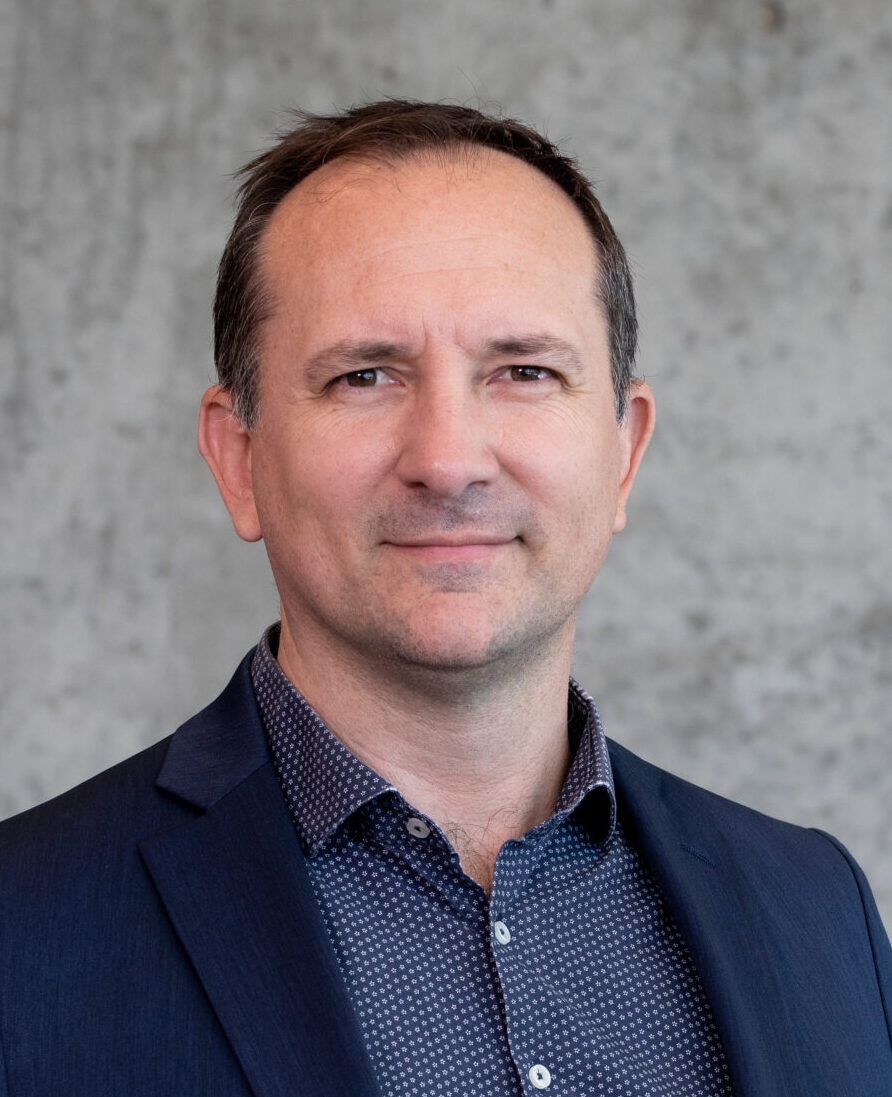
Laurent Roybon, Ph.D.

Associate Professor, Department of Neurodegenerative Science; Director, MiND iPSC Platform

Patient-Based Models of Neurodegenerative Diseases
Laurent Roybon, Ph.D.

Associate Professor, Department of Neurodegenerative Science; Director, MiND iPSC Platform

Biography

Laurent Roybon, Ph.D., is a neurobiologist with strong expertise in CNS- and induced pluripotent stem cell (iPSC)-based assays to study diseases of the aging brain.

Laurent earned his B.S., M.S. and DEA in cellular and developmental biology from the Institute of Developmental Biology of Marseilles (IDBM) in France, and a Ph.D. in neurobiology from Lund University in Sweden (mentor: Dr. Jia-Yi Li). He completed postdoctoral fellowships in the labs of Dr. Patrik Brundin at Lund University, and Drs. Christopher E. Henderson and Hynek Wichterle at Columbia University of New York, the Jenifer Estess Laboratory for Stem Cell Research (Project ALS), USA. In 2011, he returned to Lund University as assistant professor of neurobiology and group leader of the Stem Cell Laboratory for CNS disease modelling. He was promoted to associate professor in 2015.

In 2022, Dr. Roybon joined Van Andel Institute’s MiND Program as director of its new Induced Pluripotent Stem Cell (iPSC) Platform, which provides leading-edge technologies and expertise to empower breakthroughs in neurodegenerative diseases. He was appointed as associate professor in VAI’s Department of Neurodegenerative Science in 2023.

The Roybon Laboratory leverages iPSCs to design and develop new, much-needed models to study proteinopathies, including Parkinson’s disease, Alzheimer’s disease and amyotrophic lateral sclerosis. These critical tools enable detailed research into the mechanisms that drive neurodegeneration, thus creating new opportunities for therapeutic development.

Dr. Roybon has earned numerous accolades, including the Olav Thon International Research Award in Mathematics/Natural Sciences and Medicine, and Lund University’s Young Faculty MultiPark Award. While at Lund University, he received several grants from the Michael J. Fox Foundation for Parkinson’s Research, the European Joint Program for Neurodegeneration, the Swedish Research Council, the AFM Telethon France, and several Swedish private foundations.

Qiang Zhu, Ph.D.

Assistant Professor, Department of Neurodegenerative Science

Genetics, Epigenetics and Therapeutic Innovation in Neurodegenerative Diseases

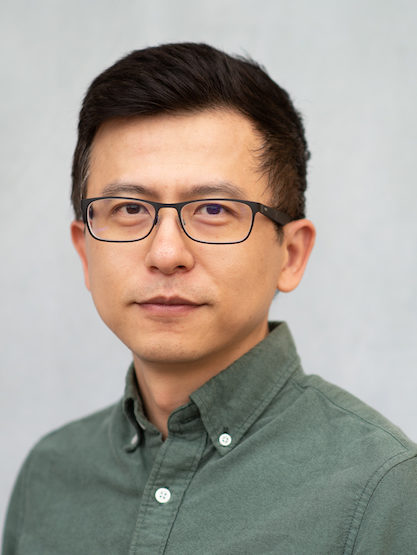
Qiang Zhu, Ph.D.

Assistant Professor, Department of Neurodegenerative Science

Biography

Qiang Zhu, Ph.D., is a neuroscientist with deep expertise in the molecular and cellular mechanisms that give rise to neurodegenerative diseases. He earned his Ph.D. in anatomical sciences and neurobiology from the University of Louisville School of Medicine. He then joined the lab of Dr. Don Cleveland at University of California, San Diego, as a postdoctoral fellow. While there, he co-led a collaborative team of researchers from academia and industry to investigate the C9ORF72 repeat expansion, the most common genetic cause of amyotrophic lateral sclerosis (ALS) and frontotemporal dementia (FTD). His work established the feasibility of an antisense oligonucleotide (ASO)-mediated therapy, which is currently in clinical trials for treating the C9ORF72 ALS/FTD. He further elucidated the synergistic effects of gain of repeat toxicity and loss of the C9ORF72 function in driving the C9ORF72-associated ALS and FTD, which revealed new opportunities for drug development targeting this mutation. He recently developed new motor neuron disease models and is collaborating with the biotech industry to explore new treatments. Dr. Zhu has earned several awards for his scholarship, including the Milton Safenowitz Postdoctoral Fellowship and the Starter Grant from the ALS Association.

Patent

Methods for reducing c9orf72 expression. PCT/US2017/027355, US2019/0142856 A1, 2016

Latest from VAI

Recent Publications

* Co-first authors# Co-corresponding authors

TNFα prevents FGF4-mediated rescue of astrocyte dysfunction and reactivity in human ALS models

  • Velasquez E
  • Savchenko E
  • Marmolejo-Martínez-Artesero S
  • Challuau D
  • Aebi A
  • Pomeschik Y
  • Lamas NJ
  • Vihinen M
  • Rezeli M
  • Schneider B
  • Raoul C
  • Roybon L

Sources

* U.S. Centers for Disease Control and Prevention. 2026. National ALS Registry Dashboard. https://www.cdc.gov/als/dashboard/index.html
** ALS Association. n.d. ALS genes and mutations. https://www.als.org/research/als-research-topics/genetics