
Rare diseases
Tackling the challenge of rare diseases
Roughly 10,000 rare diseases have been identified to date. Some, like Aicardi syndrome, affect only a handful of people while others, such as neurofibromatosis type 1, affect thousands. Because they are rare and individually affect smaller numbers of people than more common diseases, rare diseases often are understudied. For people with these diseases and their families, this can mean that there isn’t enough understanding of their condition or the right therapies to treat them effectively.
In the U.S., rare diseases are defined as those that affect fewer than 200,000 people. This means that, despite their name, rare diseases in total affect more than 30 million people in the U.S., a large proportion of whom are children.
Studying rare diseases is necessary to develop new therapies that improve quality of life for people with these disorders. This work frequently has a ripple effect — the finds may shed new light on well-known diseases in addition to rare ones.
VAI scientists pursue research that may shed light on several rare diseases, including:
- Neurofibromatosis type 1: A disease diagnosed in childhood that causes benign tumors to grow throughout the body. The gene that causes the disease also can elevate the risk of breast cancer.
- Frontotemporal dementia: A progressive group of disorders that cause damage to the frontal and temporal parts of the brain.
- Robinow syndrome: A syndrome that affects development of the skeleton.
- Osteogenesis imperfecta: A set of genetic disorders that impact bone development.
- Sclerosing bone diseases: Conditions marked by development of too much bone.
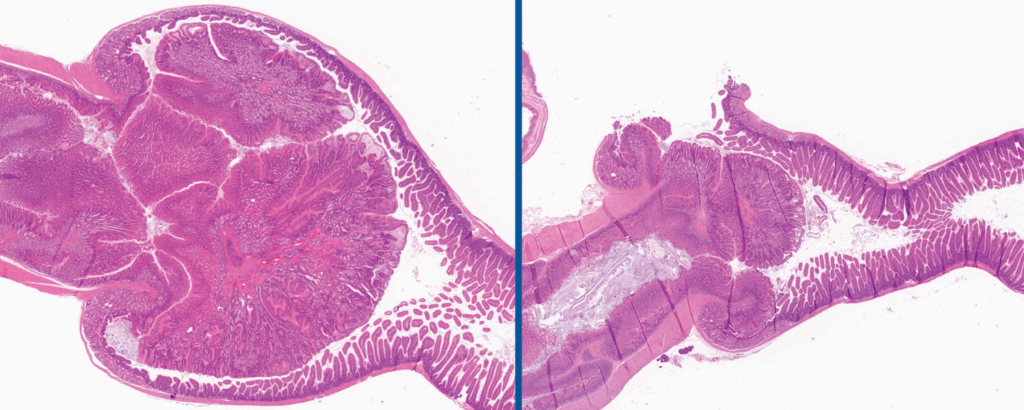
- Peutz Jeghers syndrome: A disorder in which polyps develop in the intestine and increases the risk of developing cancer.
- MEPAN syndrome: A genetic disorder that causes difficulties with voluntary movement and vision.
- Beckwith-Wiedemann Syndrome and Silver-Russell Syndrome: A pair of syndromes that impact development. In Beckwith-Wiedemann syndrome, too much growth occurs while in Silver-Russell Syndrome, too little growth occurs. Beckwith-Wiedemann syndrome also is linked to increased cancer risk; Silver-Russell syndrome is associated with increased metabolic disease risk.
By the numbers
Rare diseases
30M
People in the U.S. have a rare disease*
10,000
Roughly 10,000 rare diseases have been identified to date*
50%
Of rare diseases occur in children**
VAI scientists who study rare diseases

Russell Jones, Ph.D.
Chair and Professor, Department of Metabolism and Nutritional Programming
Cancer and Immunometabolism
Russell Jones, Ph.D.
Chair and Professor, Department of Metabolism and Nutritional Programming
Biography
Dr. Russell Jones is a leading expert in the study of cancer metabolism and immunology. As professor and program lead of the Metabolic and Nutritional Programming group at Van Andel Research Institute, his work seeks to uncover how cancer cells fuel themselves through metabolic interactions, with the ultimate goal of developing new cancer therapeutics.
He earned his B.Sc. with honors in Biochemistry and his Ph.D. in Medical Biophysics from the University of Toronto, where he studied in the lab of Dr. Pamela S. Ohashi. After completing a postdoctoral fellowship in the lab of Dr. Craig B. Thompson at University of Pennsylvania in 2008, he accepted a position as an assistant professor in the Department of Physiology and Goodman Cancer Research Centre at McGill University. He was subsequently promoted to associate professor in 2014 and, in 2017, also took on the role of director of the Metabolomics Core Facility at Goodman Cancer Research Centre. He joined Van Andel Research Institute’s Center for Cancer and Cell Biology in 2018 as program lead and a founding member of its Metabolic and Nutritional Programming group. Dr. Jones has earned numerous accolades throughout his career, including a New Investigator Award from the Canadian Institutes of Health Research, the Bernard and Francine Dorval Prize from the Canadian Cancer Society, and several teaching awards at McGill University. He was named a William Dawson Scholar in 2014 and elected to the College of New Scholars, Artists and Scientists of the Royal Society of Canada in 2015. He also serves as a reviewer for a number of journals, including Cell Metabolism, Immunity, Nature, Nature Immunology and Science.
Society memberships
Canadian Society for Immunology
American Association of Immunologists
American Association for Cancer Research
College of New Scholars, Artists and Scientists (Royal Society of Canada)
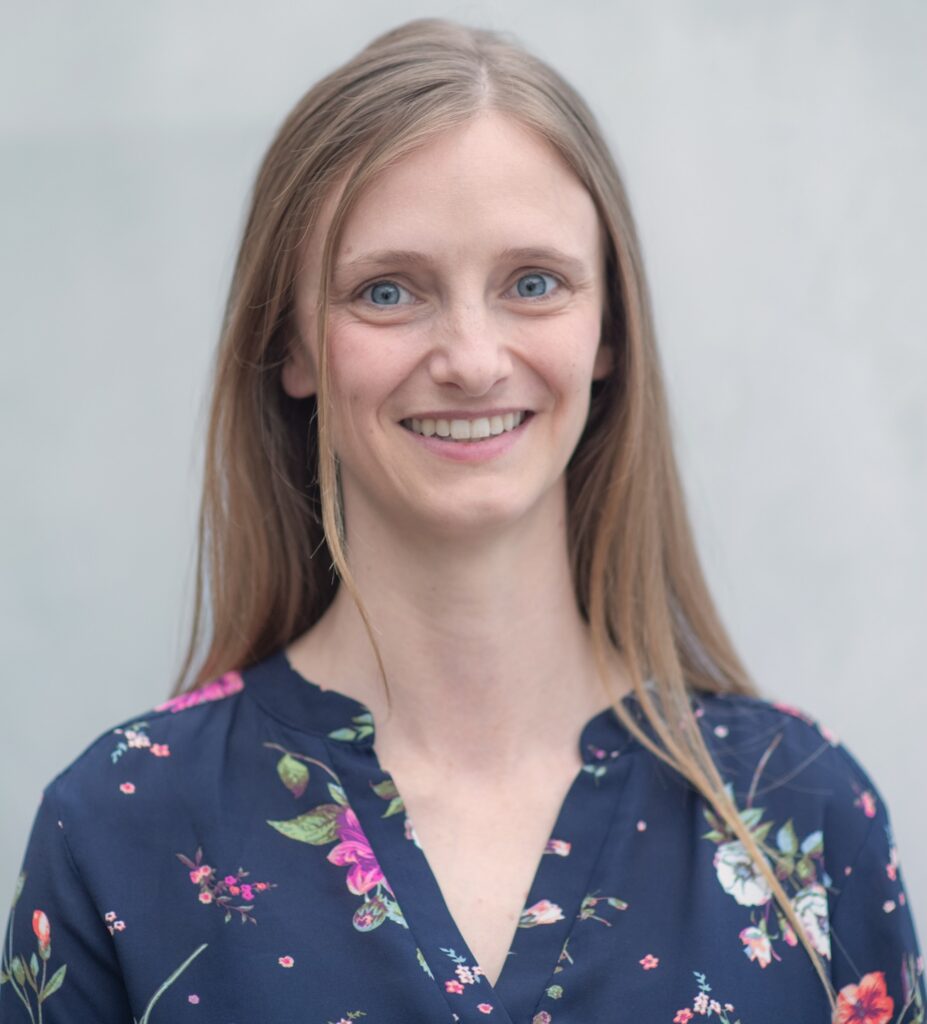
Melissa Hoyer, Ph.D.
Assistant Professor, Department of Neurodegenerative Science
Neuronal Organelle Quality Control and Health
Biography
Dr. Melissa Hoyer investigates the fundamental cellular processes that support neuronal health with a focus on organelle proteome landscapes. Her leading-edge research has deep implications for understanding the mechanisms that drive protein and organelle degradation, which are defective in neurodegenerative diseases.
Dr. Hoyer earned a B.S. in molecular biology and chemistry from University of Wyoming followed by a Ph.D. in molecular, cellular and developmental biology from University of Colorado (Adviser: Dr. Gia Voeltz). Her dissertation research helped elucidate the relationship between the endoplasmic reticulum and endosome fission, which has significant implications for signaling receptor sorting and degradation in the endocytic pathway. Her graduate work was supported in part by a National Science Foundation Graduate Research Fellowship.
She then joined the lab of Dr. J. Wade Harper at Harvard Medical School as a postdoctoral fellow, where she investigated organelle structure, function and quality control in stem cells as they differentiate to neurons. Her research has revealed powerful new insights into lysosomes and the endoplasmic reticulum, both of which are cellular organelles with links to protein aggregation in neurodegenerative diseases. She was awarded the Jane Coffin Child Fellowship (2019 –2022) and the Fred and Joan Goldberg Fellowship (2022–2024) in recognition of her scholarship.
In 2024, Dr. Hoyer joined Van Andel Institute’s Department of Neurodegenerative Science. Her lab explores the underlying mechanisms that control organelle protein levels in neurons to decipher how organelle proteome landscapes are linked to organelle structure, dynamics and function. Her research aims to better understand the establishment of neurons and maintenance of neuron cell health — both of which are dysregulated in neurodegenerative diseases.
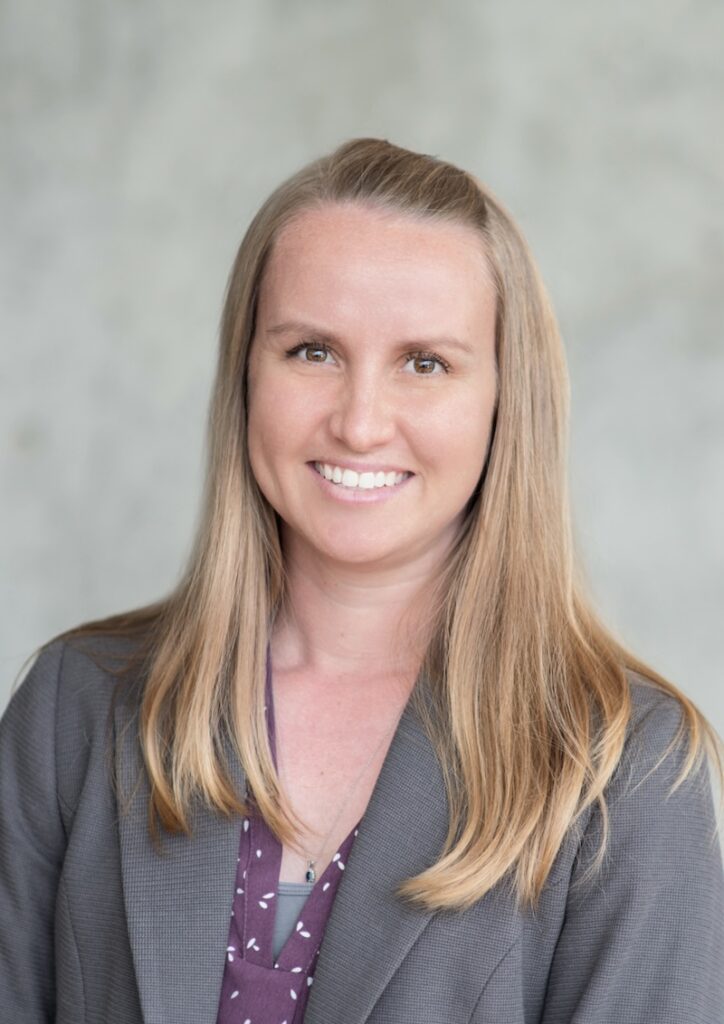
Sara Nowinski, Ph.D.
Assistant Professor, Department of Metabolism and Nutritional Programming
Mitochondria and Metabolism
Sara Nowinski, Ph.D.
Assistant Professor, Department of Metabolism and Nutritional Programming
Biography
Dr. Sara Nowinski is an expert in mitochondrial biology and metabolism. She earned her Ph.D. in pharmaceutical sciences from the University of Texas at Austin, where she investigated the role of mitochondrial respiration and cancer metabolism. In 2014, she accepted a postdoctoral fellowship in the lab of Dr. Jared P. Rutter at University of Utah School of Medicine. While there, she developed and led a project that explored mitochondrial fatty acid synthesis (mtFAS) and metabolism. Her research revealed groundbreaking new insights into the significance of the mtFAS system, and reignited interest in studying this critical pathway. In 2021, she joined Van Andel Institute’s Department of Metabolism and Nutritional Programming as an assistant professor.
Dr. Nowinski has earned numerous accolades for her scholarship, including prestigious postdoctoral fellowships from the American Cancer Society, the United Mitochondrial Disease Foundation and the Pharmaceutical Researchers and Manufacturers Association.
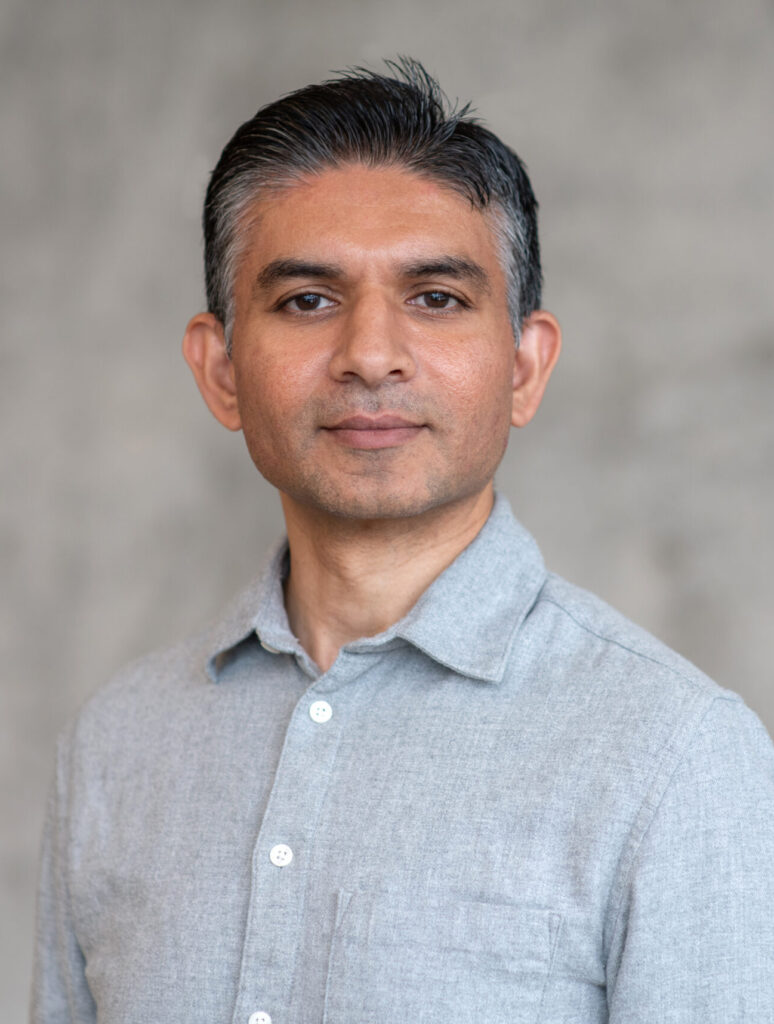
Maulik Patel, Ph.D.
Associate Professor, Department of Metabolism and Nutritional Programming
Mitochondrial genetics, cell biology and metabolism
Maulik Patel, Ph.D.
Associate Professor, Department of Metabolism and Nutritional Programming
Biography
Dr. Maulik Patel studies how cells handle, store and expend energy, with a focus on how this intricate process, connected with metabolism and nutrition, interacts with other systems to influence health, disease and aging. His research centers on cellular “powerhouses” called mitochondria, which support day-to-day function and, when faulty, contribute to rare, devastating diseases in children and common degenerative conditions in aging adults.
After earning his B.A. in cognitive neurophilosophy from Grinnell College, Dr. Patel worked as a research assistant in the lab of Dr. Larry Katz at Duke University, where he studied pheromone-based memory development. He later earned his Ph.D. from Stanford University under the mentorship of Dr. Kang Shen. His doctoral research focused on synapse development and resulted in several high-impact publications.
Following graduate school, Dr. Patel joined the lab of Dr. Harmit Malik at Fred Hutchinson Cancer Research Center, where he developed a mitochondria-focused research program. During his postdoc, Dr. Patel was awarded a prestigious Helen Hay Whitney Foundation Fellowship to support his work.
Dr. Patel joined Vanderbilt University as an assistant professor in 2015. Leveraging C. elegans as a model, his lab revealed new insights into mitochondria’s role in homeostasis, mitochondrial genome dynamics and mitochondrial fitness. Dr. Patel also developed and taught the undergraduate courses Introduction to Cell Biology and Principles of Human Disease. His commitment to supporting the next generation of scientists earned him the 2021 Excellence in Mentoring Award from Vanderbilt’s Department of Biological Sciences.
In 2025, Dr. Patel joined Van Andel Institute’s Department of Metabolism and Nutritional Programming as an associate professor. He continues to expand his research, with an emphasis on how mitochondrial genetics and metabolism influence development and physiology.

Matt Steensma, M.D.
Associate Professor, Department of Cell Biology
Translational NF1 Oncology
Biography
Dr. Steensma received his B.A. from Hope College in Holland, Mich., and his M.D. from Wayne State University School of Medicine in Detroit, Mich. He subsequently completed internship and residency training in the Grand Rapids Orthopaedic Surgery Residency Program. After completing residency, he trained in the laboratories of Drs. George Vande Woude and Rick Hay at VAI under an Orthopaedic Research and Education Foundation training award. Subsequently, Dr. Steensma was admitted into the prestigious fellowship program in Musculoskeletal Surgical Oncology in the Department of Surgery at Memorial Sloan Kettering Cancer Center in New York where he obtained sub-specialty training in the surgical management of musculoskeletal tumors. His fellowship in New York also provided Dr. Steensma with the opportunity to work in the laboratory of Dr. Steve Goldring, Chief Scientific Officer of the Hospital for Special Surgery (HSS) in New York. Dr. Goldring is one of the world’s leading orthopaedic researchers and has a particularly strong reputation for training leading clinician-scientists. During his training with Dr. Goldring, Dr. Steensma further developed his interests in understanding the molecular and cellular mechanisms underlying the development of bone and soft-tissue sarcomas. Dr. Steensma joined Van Andel Institute in 2010 as an Associate Scientific Investigator in the Center for Skeletal Disease Research. In 2014, he was named as one of the winners of the inaugural Francis S. Collins Scholars Program in Neurofibromatosis Clinical and Translational Research.
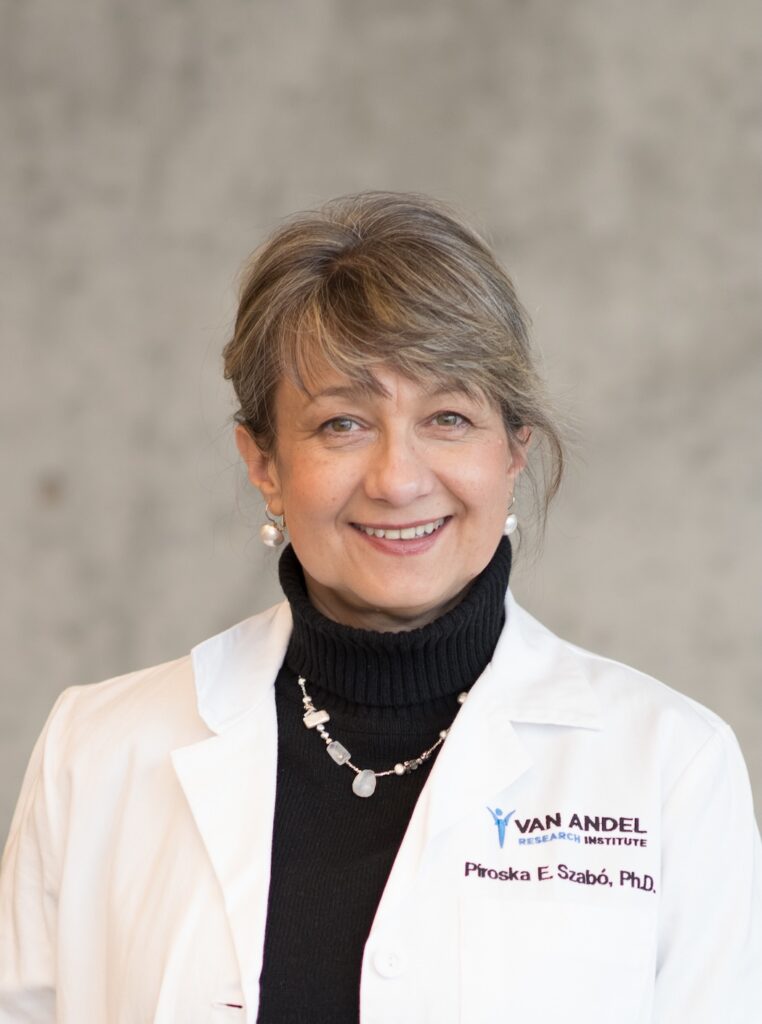
Piroska Szabó, Ph.D.
Associate Professor, Department of Epigenetics
Developmental Programming
Biography
Dr. Piroska Szabó earned an M.Sc. in biology and a Ph.D. in molecular biology from József Attila University, Szeged, Hungary. She joined Beckman Research Institute of City of Hope, Duarte, Calif. in 1992 as a postdoctoral fellow. She served first as an assistant research scientist and associate research scientist before becoming an assistant professor in the Department of Molecular and Cellular Biology at Beckman Research Institute in 2006 and was promoted to associate professor in 2011. She joined VAI in 2014 as an associate professor in the Department of Epigenetics.

Bart Williams, Ph.D.
Director, Core Technologies and Services; Professor, Department of Cell Biology
Cell Signaling and Carcinogenesis
Bart Williams, Ph.D.
Director, Core Technologies and Services; Professor, Department of Cell Biology
Biography
Dr. Williams received his Ph.D. in biology from Massachusetts Institute of Technology in 1996, where he trained with Tyler Jacks. For three years, he was a postdoctoral fellow at the National Institutes of Health in the laboratory of Harold Varmus, former Director of NIH. Dr. Williams joined VAI as a scientific investigator in July 1999. He was promoted to professor in 2013 and served as chair of VAI’s Department of Cell Biology from 2010 to 2022. In 2022, he was appointed director of VAI’s Core Technologies and Services, which provides leading-edge shared scientific resources to bolster research at the Institute and beyond.

Recent Publications
* Co-first authors# Co-corresponding authors
Sources
*Genetic and Rare Diseases Information Center. 2023. About GARD. National Center for Advancing Translational Sciences. https://rarediseases.info.nih.gov/about
**Eunice Kennedy Shriver National Institute of Child Health and Human Development. 2016. Research round-up: Rare disease research. https://www.nichd.nih.gov/newsroom/resources/spotlight/020116-rare-disease-day