

For 15 years, Van Andel Institute has welcomed scientists, clinicians and people with Parkinson’s to our annual Grand Challenges in Parkinson’s Disease symposium to explore the latest advances and most pressing questions in Parkinson’s research.
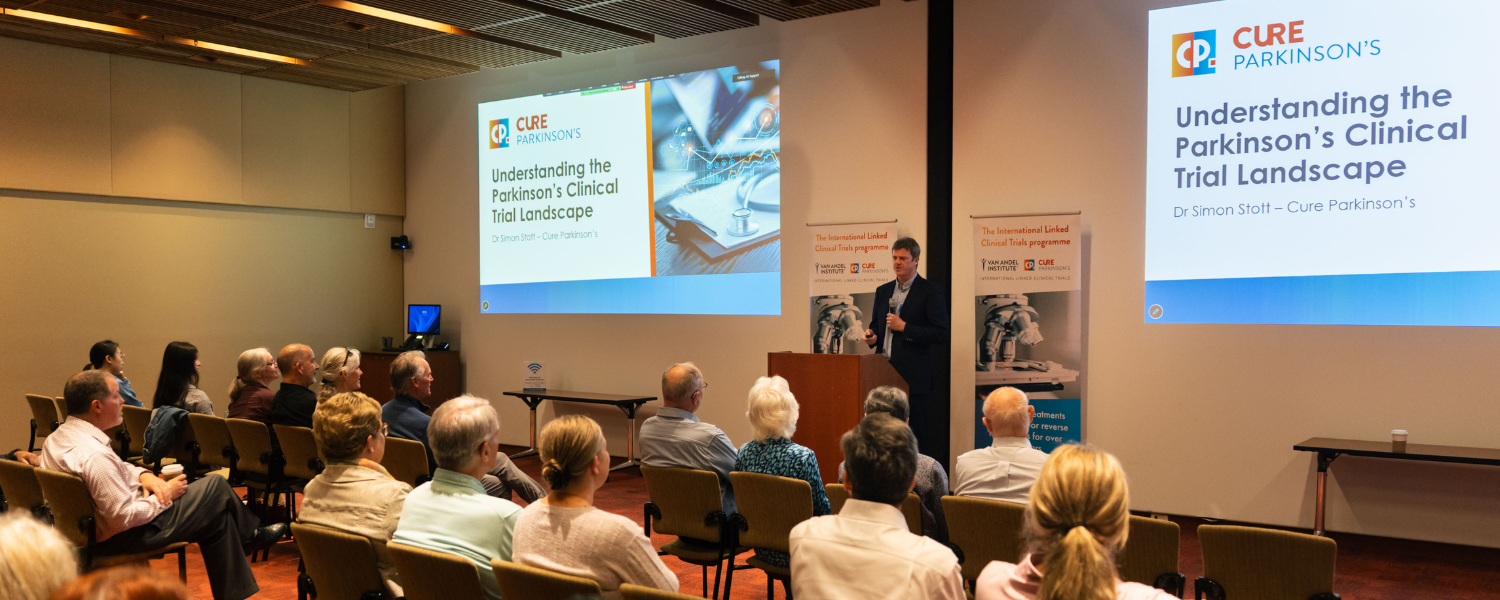
Since 2014, we also have teamed up with Cure Parkinson’s to host Rallying to the Challenge, a meeting designed for and by people with Parkinson’s, advocates and care partners that delves into how the Parkinson’s community can impact and accelerate research.
This year’s events, held Sept. 23–24, highlighted how better understanding the mechanisms that contribute to Parkinson’s can drive development of new treatments.
Here are a few highlights:
Mapping disease in the human brain
“Where” and “how” are important questions in Parkinson’s research — where does the disease start in the brain and how does it progress from cell to cell? Much of this work focuses on alpha-synuclein, a misshapen protein that clumps together to form aggregates, which in turn damage cells that regulate movement and other important functions. These aggregates spread throughout the brain by acting as “seeds,” forcing normal alpha-synuclein to misfold and clump together. Researchers are working hard to understand why alpha-synuclein misfolds and map how aggregates — and, as a result, the disease — progress through the brain.
Architecture of aggregates
When it comes to proteins like alpha-synuclein, understanding their shape is essential. That’s because alpha-synuclein’s shape is directly tied to its function — when it becomes misshapen, the proteins stick together, forming aggregates called Lewy bodies. These harmful clumps interfere with nerve cell function and contribute to Parkinson’s hallmark symptoms: tremors, muscular rigidity and slowness of movement. By understanding when and why alpha-synuclein misfolds, researchers can develop treatments that specifically target these changes and, hopefully, slow or stop disease progression.
Neuronal vulnerability
The brain is home to many different cells, including immune cells, which help protect against threats, and neurons, which send and receive messages throughout the brain and body. In Parkinson’s, some neurons are more vulnerable to the disease than others. Scientists are seeking to understand why that is, and what role immune cells play in Parkinson’s. For example, alpha-synuclein can over-activate immune cells, causing them to release inflammatory chemicals that damage neurons. Researchers are exploring this complex relationship in hopes of revealing new ways to intervene and prevent disease-associated damage.
Effects of aggregates on cell biology
Alpha-synuclein aggregates, or Lewy bodies, affect brain cells in many different ways, such as disrupting their energy systems, interfering with communication between cells and altering cells’ ability to process nutrients like fats. Over time, these changes damage cells and cause them to die, which contributes to diseases like Parkinson’s. Researchers are particularly interested in alpha-synuclein aggregation because of its central role in disruptions to healthy cell function. By understanding how alpha-synuclein affects cells, scientists can identify new ways to prevent aggregation and explore new opportunities for treatment.
Biomarkers across the disease spectrum
Biomarkers are measurable biological indicators — such as proteins or gene variants — that reveal something happening in the body. They are powerful tools for evaluating disease risk, diagnosing disease and tracking progression. But before they can be used, researchers must identify biomarkers and develop ways to reliably measure them. Some examples of Parkinson’s biomarkers include the protein alpha-synuclein and genes LRRK2 and GBA1. Tracking changes in these biomarkers can lead scientists to a better understanding of disease and ultimately, help inform improved therapies that can specifically target these biomarkers.
Honoring excellence
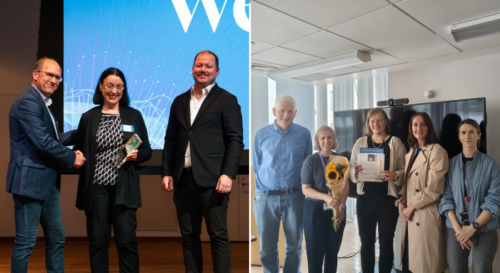
During the symposium, VAI presented Dr. Glenda Halliday with the 2026 Jay Van Andel Award for Outstanding Achievement in Parkinson’s Disease Research. The award was established in 2012 in memory of VAI Founder Jay Van Andel, who battled Parkinson’s disease for a decade before his death in 2004. It’s given to scientists who have made exceptional contributions to Parkinson’s disease research and who have positively impacted human health. Halliday is a professor and National Health and Medical Research Council Leadership Fellow at the University of Sydney. Her pioneering research has fundamentally advanced our understanding of Parkinson’s and related neurodegenerative disorders by linking clinical symptoms to underlying changes in the brain.
Together, VAI and Cure Parkinson’s also honored Dr. Esther Sammler with the Tom Isaacs Award, which recognizes a researcher who has significantly impacted the lives of people living with Parkinson’s and has involved them in their research. As both a consultant neurologist at NHS Tayside and researcher at the University of Dundee, Sammler has dedicated her work to developing better treatments for people living with Parkinson’s. She also has shown her commitment to the Parkinson’s community by working extensively with Parkinson’s advocate groups and charities.