
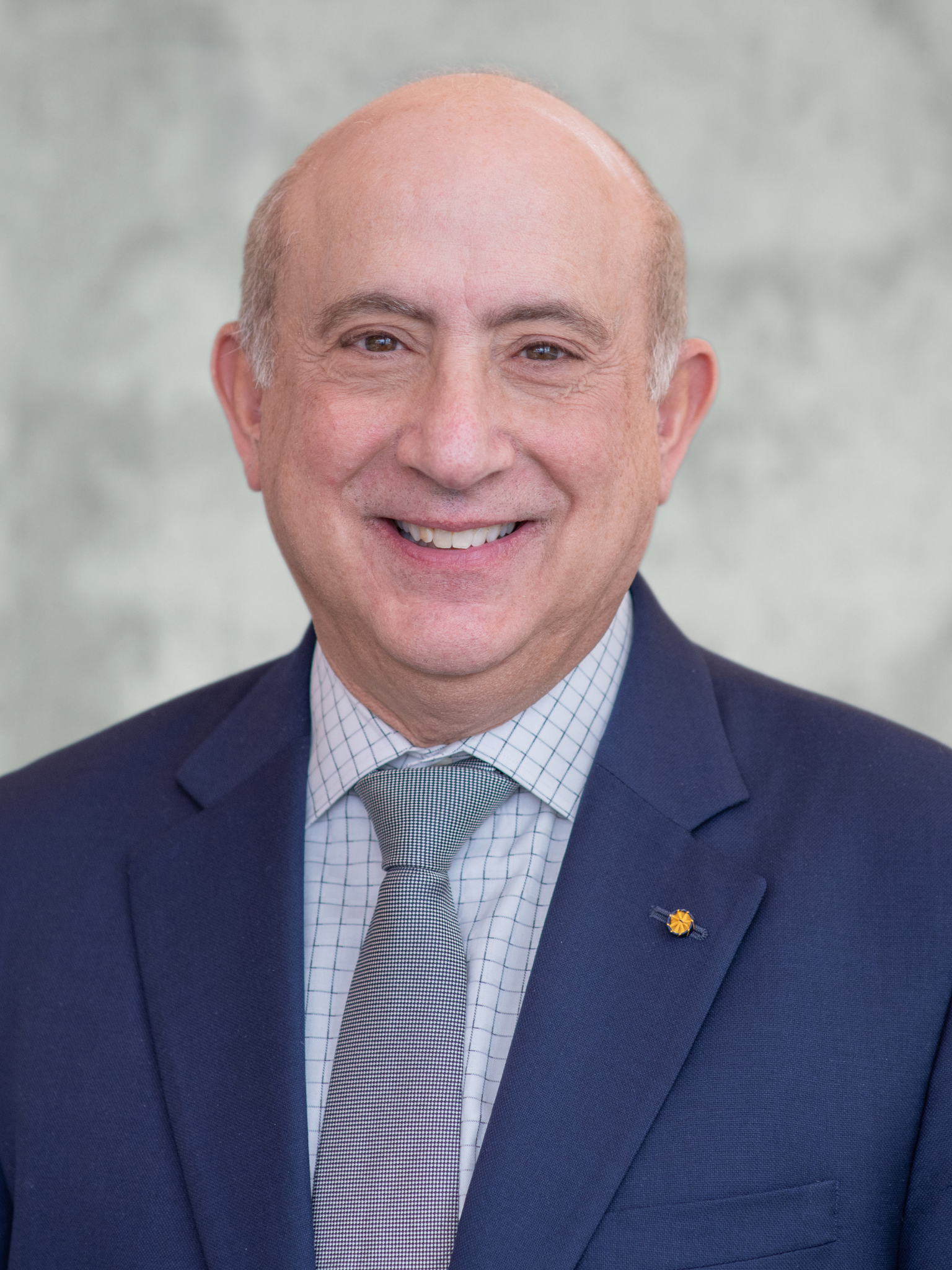
Jonathan D. Licht, M.D.
President and Chief Scientific Officer; Professor, Department of Epigenetics
Areas of Expertise
Epigenetics, histone modifications, gene regulation, cancer, leukemias, lymphoma, multiple myeloma
Biography
Jonathan D. Licht, M.D., is an internationally recognized physician-scientist who studies blood and other cancers in the pursuit of innovative therapies.
Prior to joining Van Andel Institute as president and chief scientific officer, he completed a decade of service as director of the University of Florida Health Cancer Institute, and Professor of Medicine and Biochemistry & Molecular Biology. He led the center to achieve National Cancer Institute designation in 2023 and served as inaugural principal investigator of the University of Florida Cancer Center support grant. Dr. Licht also has held senior leadership positions at the Icahn School of Medicine at Mount Sinai and at Northwestern University Feinberg School of Medicine, including service as chief of Hematology/Oncology at both institutions and associate director for Clinical Sciences at the Northwestern Robert H. Lurie Comprehensive Cancer Center.
A physician-scientist and medical oncologist, Dr. Licht’s research focuses on aberrant gene regulation and epigenetic mechanisms in cancer, spanning the pathogenesis of leukemia, lymphoma, multiple myeloma and therapy resistance in melanoma. His research program, continuously funded by the National Cancer Institute for more than 30 years, is supported by multiple R01 awards, along with major foundation funding, including a Specialized Center of Research grant from Blood Cancer United (formerly the Leukemia and Lymphoma Society) now in its 17th year of funding, and a multi-PI grant from the Myeloma Solutions Fund. These projects investigate transcription factors, chromatin regulators, histone-modifying enzymes and alterations in histones as drivers of tumor initiation, progression and treatment response. Dr. Licht has authored more than 240 original articles, reviews and book chapters, and his work has been cited more than 37,000 times. Clinically, he has treated patients with blood malignancies including acute leukemia and multiple myeloma.
Mentorship and training are central to Dr. Licht’s academic leadership. He has directed and supported trainees across the academic and professional continuum — undergraduates, graduate students, M.D./Ph.D. students, postdoctoral fellows, hematology/oncology fellows and junior faculty. His mentees have earned competitive awards and fellowships, progressed to independent research programs, joined clinical and translational faculty roles, and advanced into scientific leadership positions in academia and industry. His mentorship and leadership have been recognized by him being named the 2015 Northwestern University Feinberg School of Medicine Mentor of the Year, and with the 2021 American Society of Hematology Basic Science Mentor Award and the 2024 Leukemia and Lymphoma Society Scientific Service Award.
Dr. Licht has served in key national leadership positions with the American Society of Hematology (councilor; co-director of the ASH/European Hematology Association Translational Training in Hematology), the American Association for Cancer Research (chair, Taskforce of Hematological Malignancies), and Blood Cancer United (chair, Medical Scientific Board). He has chaired the review panel for Specialized Center grants of Blood Cancer United, served as chair of the Biochemical of the Mechanisms of Cancer Therapy-I study section of NCI and led the 2019 Gordon Conference on Cancer Genetics and Epigenetics. Dr. Licht is the inaugural editor-in-chief of Blood Neoplasia and has served in editorial roles for leading journals, including Cancer Cell, Cancer Discovery, Blood, Leukemia, Cancer Research, Clinical Cancer Research and Oncogene. His professional recognitions include election to the American Society for Clinical Investigation, the Association of American Physicians and as a Fellow of the American Association for the Advancement of Science.
Dr. Licht earned a B.S. from The State University of New York at Stony Brook and an M.D. from Columbia University. He completed a residency in Internal Medicine at Beth Israel Hospital/Harvard Medical School and trained in medical oncology and eukaryotic transcription at the Dana-Farber Cancer Institute.