
Uncovering how Parkinson’s disease progresses: A Q&A with M.D./Ph.D. student Noah Lubben
October 12, 2026
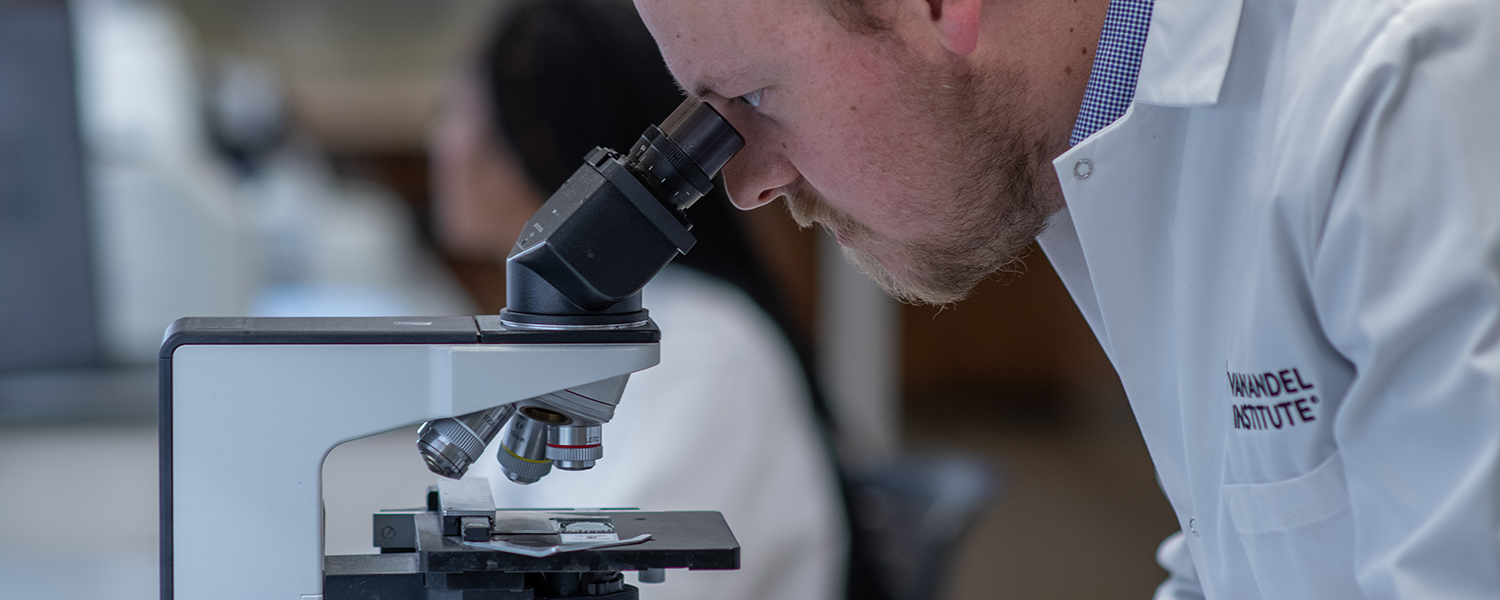
Physician-scientists bridge two important worlds: caring for people in the clinic and pursuing research that reveals the biological roots of health and disease. It’s an extremely demanding career that requires passion, dedication and rigorous education. For students like Noah Lubben, who is working toward a Ph.D. at Van Andel Institute and an M.D. at Michigan State University College of Human Medicine, the hard work is more than worth it.
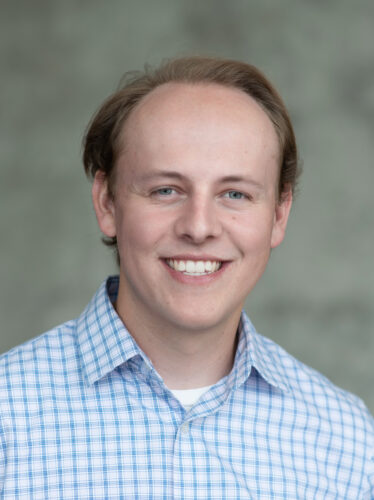
Lubben hopes to improve care for people with Parkinson’s disease, a complex neurodegenerative disorder that, overtime, impairs the ability to move and affects a range of other non-movement-related functions. Although physicians can treat symptoms, there are no approved therapies that slow or stop disease progression.
In the lab of VAI’s Dr. Michael Henderson, Lubben studies the molecular and cellular changes that occur as the disease develops. His research recently earned him a Ruth L. Kirschstein Predoctoral National Research Service Award from the National Institute of Neurological Disorders and Stroke of the National Institutes of Health. The award will support his training as a physician-scientist and help advance his efforts to identify new opportunities to slow or stop disease progression.
What is the big problem you’re working to solve with your project?
NL: Parkinson’s disease affects more than 1.1 million people in the United States. In Parkinson’s, a protein normally found in brain cells, called alpha-synuclein, begins to fold abnormally and clump together, forming structures known as Lewy bodies. These abnormal protein clumps affect different parts of the brain and are associated with cognitive and physical symptoms such as tremors, stiffness, slowness, changes in memory, thinking and mood.
Current treatments can help manage symptoms, but they cannot slow or stop disease progression. Some of the biggest unanswered questions in Parkinsons disease are: What happens inside brain cells as Lewy bodies form? Which changes happen first? Which changes lead to cell damage? And which changes might be reversible?
My research aims to answer these questions by tracking the sequence of molecular and cellular changes that occur as Lewy bodies develop. By identifying the earliest steps in this process, I hope to discover new opportunities to intervene before brain cells are permanently damaged. Ultimately, this work could help lay the foundation for therapies that slow disease progression and improve the lives of people living with Parkinson’s disease and other related disorders.
How will this award help?
NL: Recently, our lab identified a set of molecular changes that are characteristic of brain cells containing Lewy bodies. This work provided an important snapshot of what these diseased cells look like, but a snapshot cannot tell us about the order in which those changes occurred. It’s like seeing the final frame of a movie without knowing how the story unfolded.
My research uses advanced technologies that allow us to reconstruct that story by identifying the sequence of molecular changes that occur as Lewy bodies develop. By determining which changes happen first and which occur later, we hope to pinpoint the stages in this process where treatments may be most effective at preventing or slowing disease progression.
This fellowship will provide the support, mentorship and specialized training I need as an emerging physician-scientist. My long-term goal is to become an independent movement disorders neurologist who combines patient care with research to develop better treatments for people living with Parkinson’s disease and related disorders.
What is the most exciting part of your research?
NL: What excites me most is the opportunity to contribute, even in a small way, to improving the lives of people living with Parkinson’s disease. Scientific progress rarely comes from a single breakthrough; it comes from many discoveries that build on one another. As a future physician-scientist, I look forward to leading research that addresses the questions that arise in the clinic. I hope my research helps move the field one step closer to treatments that can slow or stop disease progression, while also preparing me for a career to care for people living with neurodegenerative diseases.
Learn more about Parkinson’s disease research at VAI ➔
Funding Acknowledgment
Research reported in this publication was supported by the National Institute of Neurological Disorders and Stroke of the National Institutes of Health under award no. F30NS149794 (Lubben). This content is solely the responsibility of the authors and does not necessarily represent the official views of the National Institutes of Health or other funding organizations.