

For generations, education has relied on tradition, intuition and habit. Today, the science of learning is raising the standard. Educators treat new ideas as testable, use evidence from real learners, and improve instruction through iteration.
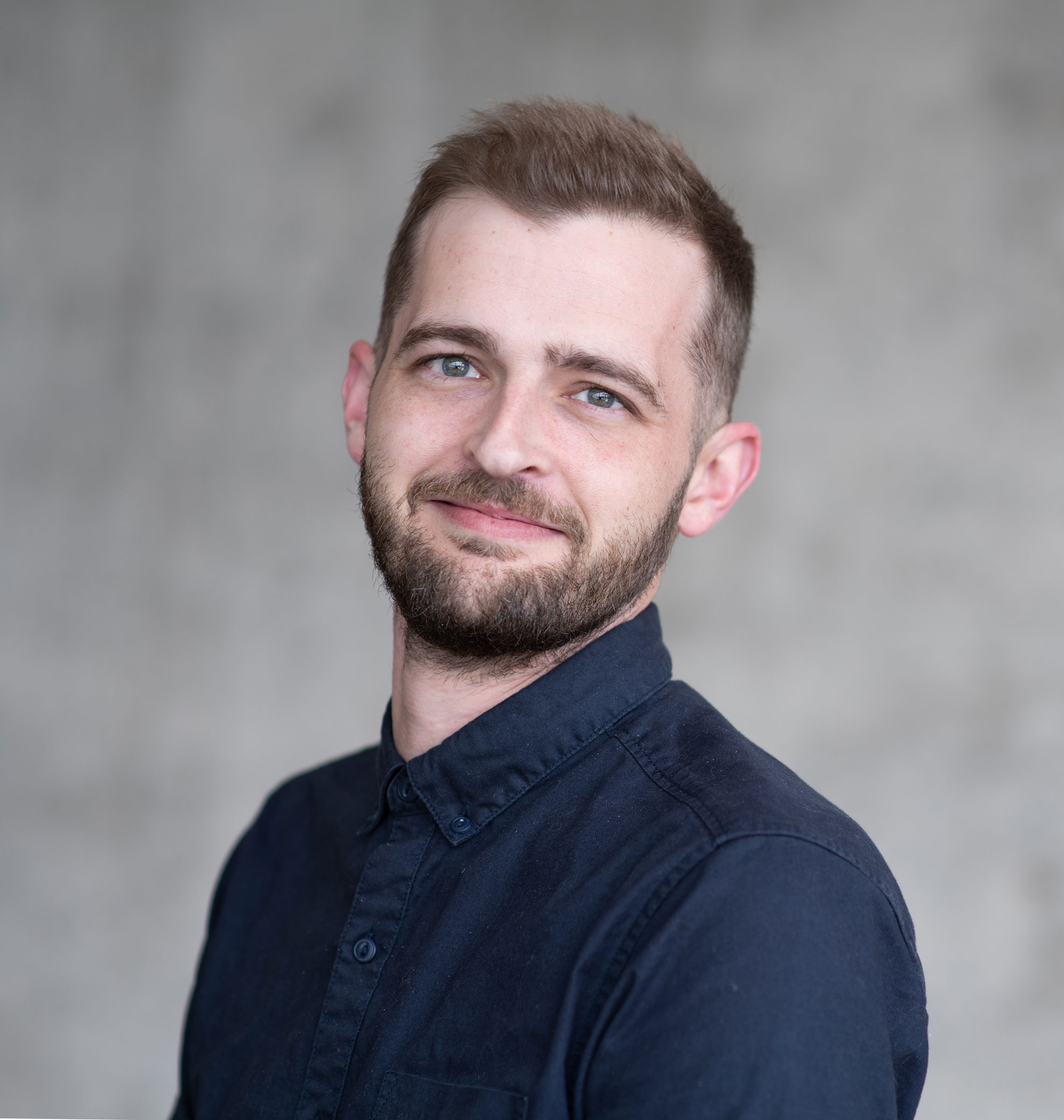
At a public lecture this spring, Van Andel Institute for Education Learning Specialist Ben Talsma demonstrated how teachers and students are putting the science of learning to work, cultivating classrooms where curiosity, creativity and critical thinking thrive.
Watch the lecture below:
Video transcript
Note: The following transcript has been edited for readability.
Maranda:
Welcome to the Van Andel Institute’s Public Lecture Series. I’m Maranda and I love these events. Every time I come to a Public Lecture Series, I leave feeling a little bit smarter. I bug everyone at the station telling them all the big things I’ve learned, and it’s an interesting way to go. So I know today you’re gonna love it. Just joking with our presenter that, oh, to be a fly on the screen. I had to say it because we thought it was a good one.
Today we have two topics that exist at the core of VAI. We’ll be discussing science and education and how they are coming together to transform the future of learning. At Van Andel Institute for Education, we have a team of dedicated educators who help teachers and students put the science of learning to work. They do that through cultivating classrooms where curiosity, creativity, and critical thinking thrive.
They also help teachers across the country accelerate lasting change. They get teachers excited to bring creativity and science together in the classroom. Today we are joined by a learning specialist Ben Talsma. Ben is a nationally recognized educator and speaker who turns professional learning into practical energizing experiences for schools across the country. I have seen this guy firsthand in action and he loves his work as a learning specialist.
At VAI Education, Ben combines more than 20 years of K–8 classroom experience with research-backed strategies that strengthen teaching practices. He taught, takes emphasize, he talks, emphasizes measurable classroom impact. I don’t know what that means. Um, and he is straightforward with the strategies he presents that helps teachers cultivate classrooms and get kids excited about learning. You’ll be excited about learning as you listen to Ben present today.
I want to just make you aware that as soon as the presentation is done, we will move into questions and answers. You’ll have the opportunity to ask those questions here in person. We’ll have runners with microphones, and if you are online, we encourage you to use that chat function to ask that question. Without further ado, please join me in welcoming Ben Talsma.
Ben Talsma:
Thank you very much, Maranda. As some of you have probably already figured out, using your keen powers of deduction, that is a fly. And if you got that one right, you can probably get this one right as well. These are human teeth, men’s teeth, women’s teeth, and the third item in that series, logically would have to be Aristotle, of course, because Aristotle had some great ideas. For instance, that whole golden mean thing in ethics, the power of the logical syllogism. And for our purposes today, this idea of eudaimonia, which roughly translates into “the good lives”, right? The idea that what we really ought to be pursuing is deep, rich, human flourishing. So Aristotle, smart guy had some good ideas. However, he also had some breathtakingly almost comically bad ideas as well. For instance, when it came to our good friend the fly here, Aristotle had this to say,
It’s really hard to get an authentic recording of Aristotle’s voice in the original Greek, but I hunted that down for you. If you don’t speak Greek, that translates into this. “All flies have four legs”, which seems faintly ridiculous to us today. One of the greatest geniuses of the time can’t count the legs on a fly. Similarly, when it came to human teeth, Aristotle was quite convinced that men have more teeth than women. Now, in fairness to Aristotle, he did say this prior to the most recent Olympic hockey game. However, however, it seems obvious to us that when it came to statements like this, things that he was putting out there into the world, he should have just counted the teeth. He should have just counted the legs on the flies. In fact, you can do this for yourself. Why don’t you find a stranger of the opposite sex and ask them to open their mouth a minute so that you can count their teeth and compare them to your own?
Only one person took me up on that in the in the actual audience. No, this idea that we should take our ideas and put them to the test seems super obvious to us today. So it makes us empathize with the great man, Vizzini, one of the greatest intellects of our generation who thought about Plato and Aristotle and Socrates and called them morons. But of course, Aristotle wasn’t a moron. He was an intelligent guy. The issue was that he wasn’t doing science as we envision it right now. He was doing something more akin to natural philosophy, philosophizing about nature, exercising his reason, his wisdom, and then using that to make conclusions about the world. The problem is that when you do that kind of approach, when you don’t put your ideas rigorously to the test, you can fall prey to the allure of the siren song of ideas that sound good, but which don’t actually match reality.
For instance, this idea of having more teeth came from his idea that our growth as humans is caused by vital heat, which makes some sense when we’re alive and growing, we’re warm and when we die and we stop, it’s cold. It has some empirical evidence behind it. But then he took this and started to think forward from it. So he said, Hey, men are generally larger than women, so therefore they must have more of this vital heat. So he thought that men were hotter than women, and you can make your own joke that fits your purposes there. If they have more heat and if heat causes growth, then they must grow more teeth. It’s obviously true, no need to go out there and check it. Now, the issue with this kind of thinking is that quite often doesn’t match reality and that has negative consequences in the world, right?
When our ideas are more wrong, we’re less capable of having a positive influence. So for centuries, women’s healthcare languished, because people perceived that health issues must be due to their inherent flaw, their lack of vital heat, and so many people suffered and died because our ideas didn’t match reality. The problem with ideas that sound good is that quite often they run a ground on the rocks of reality up until this guy and others, but especially Francis Bacon, that is Francis Bacon right there actually to be more correct, Sir Francis Bacon who published the Novum Organum. The Organum was one of Aristotle’s most famous works. This is the Novum, or “new”, Organum, updating, revising, refining some of his thinking about how we should go about understanding the world. The fundamental idea, Francis Bacon wasn’t from France, but we’re just gonna keep it in France to stick with that atrocious pun, the power of his idea was that you should take those ideas and put them to the rigorous test to see whether or not they match reality.
That this approach, marrying reason with experimentation, was the way for us to get less wrong about the world. But of course, it wasn’t just about becoming less wrong. It wasn’t just about being able to correct our understandings and correct the understandings of others. This empirical scientific approach is incredibly powerful at creating a positive impact in the world. So because of that fundamental breakthrough, now we can conquer the night, we can cure smallpox, we can dramatically increase crop yields. All of those wonderful things that we get from science, engineering, technology, they harken back to that fundamental idea that we should not engage in this, uh, natural philosophy, but that we should engage in science, putting our ideas to the rigorous test. This is how we can actually go about promoting that kind of eudemonia. It’s this marriage of reason with experiment that helps us accomplish all those great things that distinguish our society from the days of Aristotle.
Now, we also want to keep in mind that we do this for a reason, to be right, to be true for sure, but also to have a positive impact. The mission of Van Andel Institute where we are right now, is to use that process, that fundamental way of thinking about the world to have a positive impact on human health and other disciplines have positive impacts in their areas. So right now in this building that we are standing in, there are hundreds of scientists at work right now to try to help cure cancer, Parkinson’s, Alzheimer’s. Our mission, my mission at the Van Andel Education Institute is to help translate the work that they do and make it available for teachers and schools and students. So we’ve developed in collaboration with those scientists a way of thinking about how to think like a scientist and every day with teachers, um, through the creation of resources and through work with students, we bring that to life with engaging science experiences that help kids get excited about science, but also to understand it more deeply.
So that is what we are doing here today to take a look at how the science of learning is transforming education. And the first thing that I want us to understand is that teaching is not rocket science. Teaching is not rocket science. Rocket science is super complicated, right? You have to think about things like mass and thrust and angles and atmospheric conditions, and you have to use all of these to make these fine calculations about exactly how things are going to go so that you can accomplish your purposes. Teaching is not rocket science, which raises the question, why haven’t we in the discipline of education, been able to help create some of these incredible advances, these incredible understandings like we see in some of the other sciences?
Well, the basic, well, sorry, I’m not, before we get to the basic reason, why is it that we see the field of teaching seeming to swing back and forth, chasing after the latest fad, pursuing one idea, and then 20 years later pursuing what seems to be the opposite teaching idea. Why is it that we do get good concrete scientific breakthroughs? It takes so long to filter out into the world of teaching. One of the things which characterized those ancient Greeks was kind of this, um, just articulation that there are exactly four humors or there are exactly four elements in the world. Why do we see so much thinking that rhymes with that in education? Well, the reason is because teaching is not complicated. Teaching is complex. When we think about complex systems, what we think about is systems in which subtle changes in one condition in one place can have unpredictable, chaotic effects on other elements of that system.
Here’s a graph that shows a phenomenon called, uh, sensitive dependence on initial conditions. Those two lines start off in the same spot, almost, right? They start off in almost the same spot, but that little difference at the beginning, while it doesn’t change much in the short-term does in the long-term, so that by the middle of that graph, that tiny little change in what happened at the beginning results in big changes down the road. Teachers have to do this kind of thing. We have to think about how the work that we’re going to do with this one kid or in this one class is going to change how our students as a whole live that eudemonia, live those full, rich, flourishing lives. And it’s often really tough to predict. The classic example of complex or chaotic systems is the butterfly. The butterfly who flaps its wings in Africa.
And what happens starts a tornado in Kansas, right? This is how chaotic systems work. A little change here can add up, can cause big changes somewhere else. But if you’re a teacher in a classroom, you have to do that with intention. You have to be the butterfly that flaps its wings on purpose. In order to start a tornado in Kansas, it’s a challenging, challenging job. And to top it off, you’ve got budget restraints, time crunches, behavior challenges, all the many things that we know make teaching a more difficult job. So as a particular passion of mine to remind people that teachers are engaging in a really difficult science, right? It’s complex, it’s chaotic. We’re figuring things out, we’re learning, we’re growing, but it’s not a smooth sort of path like it might be in rocket science. It’s going to involve some additional challenges. I do hope to drive home the point that we don’t want to heap opprobrium on teachers because they are doing the best they can in a difficult environment.
At the last public lecture series, my director, Terra, was sitting right up here and she said something which seemed uncontroversial to us. She said, we ought to trust teachers. They’re well intentioned, they have the kids’ best interests in heart, and they’re doing the best that they can. It says, no comments over here, but that’s a lie. There were lots of comments. We just had to erase them. We had to remove them because they were so antagonistic and occasionally vulgar, right? People are aggressively antagonistic toward this kind of idea, and it’s so at odds with what we see every day. When we work with teachers in the classroom, we see so many incredible talented, dedicated individuals who are really thinking hard about how to do the best job that they can to produce that flourishing in their students. So if you walk away with something today, I hope it’s a little clearer picture, a little better.
Look at the specifics of how this incredibly powerful thing, science, interacts with these incredibly chaotic and difficult environments in the classroom. So let’s dive in. Let’s think about the science of teaching and learning. And I think that weather is a nice analogy here, right? Because we do understand a lot of things about weather. Maranda was just telling me when the storms were rolling in, they could pinpoint right down to the minute, even to the second when a storm was going to arrive in a certain area. We are understanding more and more about this, but of course, it’s not a perfect science. If we try and look 10 days, 20 days into the future, that chaos interrupts our uh, certainties and it becomes more and more challenging. But we do understand some big fundamental principles about how weather works. And the same is true in teaching and we’re advancing that every day. So we’re gonna explore some of those big ideas about what we know about teaching through a little game. You ready to play? It’s called Two Truths and a Lie. So I’m going to show three statements and I want you to try and figure out, and if you’re sitting next to, but somebody, you can tell them which one of those three statements you think is completely fictional. You ready?
There they are. People learn better when instruction matches their preferred style. It’s one statement might be true, might not. Self quizzing beats rereading for long-term retention of information. So we’ve got self quizzing trying to remember stuff or re-exploring rereading that passage. And testing can improve learning even if the test is not graded. So why don’t you go ahead and point to the one that you think is a lie, and then I’m gonna reveal the answer. Which one do you think is a lie? There you go. There you go. These two are correct. They are well supported by the research. This one, not so much. Let’s take a look at that one first. It is true that people have preferred learning styles, right? You might have a kid who really loves to learn kinesthetically about the world around them. It’s also true that subjects have a nature, a way that you can learn about and understand that subject. Math can be understood mathematically.
For a long time, we wanted to build a bridge between a preference and the subject that we were trying to teach. We had this idea that, hey, if you teach kinesthetically, your kinesthetic learners will learn better. If you teach musically, your musical learners will learn better. The competing idea was that our learning is flexible. Even if you’re not a great mathematical learner, you can still learn mathematically. And the job of the teacher is to help students improve their capacity in that area that’s relevant to their learning. And of course, we went and we put that to the test. We saw which of those bridges that gap best. And although all science is tentative and we could revise our conclusions in the future, there’s pretty solid evidence right now that if we teach math mathematically and build mathematical understanding that produces better, more durable, more applicable gains in students than if we try to match their learning preferred style.
It reminds me of one of my favorite bits of non-educational research about treadmill desks. You see, they took an organization, they took a company and they gave, randomly distributed, people treadmill desks, and then they came back and gave them surveys, and they looked at kind of their performance and stuff. And after weeks and after months, the people who had been randomly given those treadmill desks loved their job more. They had better reported physical health outcomes. They had better reported mental health outcomes, and their productivity disappeared. They got almost nothing done when they were rocking on those treadmill desks because preference and performance are not always the same, right? I might prefer to learn while stuffing my face with cotton candy, but it doesn’t mean that that’s gonna help me actually retain information. So a little bit about learning styles. These other two, these are fundamentally about the power of repeated recall, about how if we want to remember something, we have to practice remembering it in the same way that if we want to get good at shooting free throws, we need to practice shooting free throws.
If we want our students to be able to remember things, it helps them to be to practice remembering. So if they take a quiz, if they take a test, the simple act of pulling that information back from their memory to their attention can help solidify that pathway. There’s the forgetting curve. If we learn something once, we forget it pretty rapidly. If we review that, we re forget it a little more slowly. If we review that again, we forget it more slowly still. This applies across a wide range of disciplines, across a wide range of domains. It’s one of the most powerful findings in recent, recent research. The power of repeated recall. So if you’ve got a student, you’ve got a child, a grandchild who’s studying for a test, remind them to quiz themselves repeatedly. If we want to get better at learning, or sorry, remembering it helps us to practice remembering that actually has a my component in our brains. It kind of sheaves that pathway in our brains, which is required for recalling and remembering that information. So that was round one. Here is round two. See what you think about these three. Which is the lie?
Can creating cognitive overload really impair students’ learning? Or is that what we should be pushing for? Content knowledge is less important than teaching higher order thinking skills. Students generally improve more from feedback when it’s given without a grade point to the lie. See if you can spot it. Everybody’s a little bit more willing to use their fingers now. All right, let’s reveal the answers. Did you get it right? Alright, let’s take a look at these. One thing, cognitive overload, that we’re learning more and more about is just the limitations of our working memory. The amount of stuff that we can be processing at one time, it’s limited and it’s fixed only about four kind of chunks of information that we can simultaneously be working with. If you overload that, you will impair students’ ability to learn new stuff, right?
There’s a point where challenge and struggle are productive. There’s a point at which it becomes overloaded. And if we overload the cognitive system beyond what it’s capable of doing cognitive overload, we’ll impair students’ ability to learn. So one of the things that teachers think a lot about right now is managing cognitive load, making sure that it’s appropriately challenging for students. When we think about feedback, teachers think about formative and summative or summative, we accept both sorts of assessments. Formative assessments are the ones that help the student and help you kind of shape their learning path as they go. The other kind of assessment is where you’re just like reporting and giving a grade. And in students’ minds in general, they don’t do both simultaneously. So when we give feedback, we want to take a look at their work and give them support that’s timely, that’s specific, that’s actionable, which helps them to improve what they’re doing and understand new things going forward.
When we put a grade on it, that pulls the attention to the summative component and away from the formative component. And so more and more teachers are shifting away from mixing grades and feedback and giving either feedback if it’s a formative assessment or purely summative, if that’s the purpose of what you’re doing, because they can compete with each other in terms of what students pay attention to and good old content knowledge. 15 years, 20 years ago when Google was new, we used to think that Google might kill the need for content knowledge. Why memorize something? Why learn something when you can just look it up? There’s an inspirational poster for you. That idea sounds really good, right? It’s one of those ideas that sounds good, that spreads really rapidly. Hey, we can look stuff up. We don’t need to know it anymore. Let’s shift the focus of our education.
The problem is that that runs into the rocks of reality. When we put it to the test, it just doesn’t work because content knowledge is the foundation for those higher order thinking skills. If you know stuff about the world, you’re able to think with it more effectively. It actually, in terms of that working memory, allows you to build bigger chunks, right? So that you’re able to work with more information. So content knowledge is extremely important. It’s the foundation of thinking skills. All right? I said that practicing remembering stuff is really important for remembering it. So pop quiz, what do you remember about the first six cards that were up there on the board? Close your eyes. Think back. How many of those six big scientific lessons can we remember?
If you open your eyes, there’s some clues on the board. Some things that we might have touched on. So we’ve been exploring how retrieval is super powerful. Testing itself can exercise that retrieval, we’ve talked about the difference between preference and performance, about how grades and feedback can compete with each other about how cognitive overload is not something we should be striving for in the classroom. And about how content knowledge is a crucial foundation for higher order thinking skills. These are just some of the myriad of things that we are learning. Big picture about, generally, how these weather systems that we call human brains operate one final round. Go ahead and point to the lie. Effective classrooms recognize that students are not motivated by the same things. True or false Inquiry learning is most effective when students receive clear guidance and sufficient background knowledge. Students who understand a concept, who understand a concept will generally apply it correctly in new context.
Go ahead and point to the lie. And if you’re watching at home, you can point to the lie too. All right. The big reveal, there it is. Oh, some, some surprised oohs. Alright. When it comes to motivation, it is true that humans are generally motivated by the same sorts of things. And in our work with human cognition, quite often we find that brains are more similar than they are different, and that we learn and operate more similarly than we do differently. However, human motivation is a complex thing. And while we all are motivated by things like relatedness, autonomy, mastery, and purpose, people differ in the degree to which each of those motivates them. And so teachers should understand that diversity in their classrooms and it operates best when they understand various human motivations. When it comes to inquiry learning, this is true inquiry learning is not a free for all.
It doesn’t mean that we just let kids explore and see what they discover. When we help teachers to use inquiry learning in their classrooms, when our students engage in inquiry learning experiences, those are structured to help support their ability to engage in that inquiry productively, right? So we start off doing things like giving them a foundational experience, but then we scaffold that by structuring a scientific investigation where they can think and act like scientists in a supported way before using that experience to be able to launch their own inquiry investigations. The fundamental process of thinking and acting like a scientist supported by our success skills, speaking of which, we have a study in pre-publication right now on the importance of these success skills and how to build them. That’s actually at our next public lecture series, I believe. So you might wanna sign up for that if you’re curious. In terms of application, students can know how to do something, they can understand, um, adding and subtracting with decimals, but they can still struggle to apply that when it comes to making change. If we want students to be able to apply their understanding across disciplines, we need to give them practice doing that. It’s one of the reasons why we are so passionate about project-based learning, about giving students opportunities to apply what they’ve learned in different contexts, especially contexts where they’re making a positive impact on their schools, their community, or the world. Because in order for kids to have that transfer of skills, they need to practice the transfer.
So you will notice in here attention. Some of the things that science is finding mix really nicely with old school approaches. Kids gotta know stuff, right? Memorizing stuff can come in handy, right? It’s important to get quizzes and, and that kind of stuff. Over here, you might see more new school kind of things, right? Like kids need to, uh, teachers need to understand diverse motivations, project-based learning to help kids use what they know to have a positive impact. The beautiful thing about science is that it doesn’t care about schools. It doesn’t care about ideology. It cares about what actually happens in reality. We think about science as having a scout mindset instead of a soldier mindset. A soldier is primarily interested in defending their school and defending their ideology and shooting down any opposition to that. A scout mindset is interested in finding out the truth. The sign of a scout mind is that it is willing to change if it gets a good reason, but it’s also willing to convince others with good reasoning itself. And together we can seek to find the truth that’s at the heart of great thinking and acting like a scientist.
It leads us, however, into the wars. There are battles out there in the world of science research, and I wanted to touch on two of them today. The most famous of those is the reading wars. Anybody familiar with the reading wars sold a story? Big, uh, podcast lately? Dove into this topic reasonably well, not perfectly. We had two sides to this. We had the phonic side, which taught that kids needed to learn this alphabetic code, right? They needed to be able to figure out that. B says buh and D says duh. And C says kuh, but sometimes s. And that figuring out that was at the heart of learning how to read. On the other side, we had whole language, which downplayed that and privileged engaging in rich texts, right? Naturally learning, reading. The same way that we learn speech. Now, we’ve come up with some things.
We’ve discovered some things by putting those ideas to the test, and we now know pretty well how it works to teach kids to read. Here are a couple of key findings. First of all, reading’s not natural. Like whole language speculated, right? It takes effort, it takes work. Systematic phonics is valuable. Understanding that alphabetic code is super powerful. Phonics is a piece of the puzzle. It’s not of course the exclusive piece. We also want to do things like developing fluency by allowing students to engage with appropriate texts. When they develop that fluency, that automaticity, that helps them to become literate individuals, we think about kind of a big five components of great literacy instruction. Phonemic awareness down here is, um, not interacting with text. This is interacting with sounds, getting kids to be able to manipulate the sounds of words in their mind. So if you know that bat is buh, ah, and tuh, then you are engaging in phonemic awareness, on top of that, we can layer phonics, right?
Understanding how those written signs connect with those sounds. We need to develop fluency and automaticity. Again, allowing students to do some significant reading and appropriate text. And then teaching them vocabulary and comprehension skills on top of that foundation. The good news is that this kind of instruction is spreading rapidly, right? As we become more aware of how to teach, more and more teachers are teaching reading in a science-based way. I dunno if you can read the years on the bottom, but it starts at 1980 and moves to 2025. Now interestingly, as we’ve taught reading in a better and better way, scores have kind of fallen off a cliff, which raises an interesting point about science, right? In a big analysis like this, there’s lots of other competing factors. For instance, the scores also fell off right about time we had the COVID shutdowns and also right about time that the students who were taking those tests had grown up in a smartphone world, who had the parents, who had smartphones.
So quite often in education, we need to keep in mind that the environment in which teachers teach is not fixed, right? And at a systems-wide level, other factors can influence systematic outcomes. Sometimes we fall into this fallacy. The, the hoc ergo propter hoc logical fallacy. After, therefore because of. The rooster crows, the sun rises. Therefore, the rooster crowing caused the sun to rise. Scores fell off after we started teaching reading. Well, therefore, teaching reading made the scores fall off. Now it’s not the case when we zoom in, when we look at this scientifically, this is a really rich, powerful way to teach. We also have so to represent when it comes to the reading wars, integrating some of those understandings from whole, whole language. Some of those points about the importance of getting kids motivated to read and getting them engaged in rich texts.
Those are valuable. But primarily those findings, those lessons from phonics are grounding the work that we do into the teaching of reading right now. We also have math wars here, right? We can battle between this deep conceptual understanding and this idea of fluency, right? Procedural fluency. It’s demonstrated in videos like this one. How many people saw this video when it was making the rounds a couple of years ago? Here we have somebody understanding math on this side. Somebody procedurally doing math on this side. This person solves the question really fast and goes out to make a cup of coffee. This PORs schmuck is still stuck. Understanding math. This way is faster. Therefore, this way is better. Was the implication? Is that true?
Well, as is often the case, it’s a mixed bag, right? It is important to develop procedural fluency that helps offload, again, things off that working memory. If you have to solve a high math question and you also have to figure out what seven times eight is, it’s 56, then your brain has to do extra work that it can’t devote to solving other aspects of that challenge. Procedural fluency is important. Giving kids practice is important. It’s also important that kids develop a deep, rich understanding of how math describes the real world. Giving kids that concrete foundation, that deep relational understanding is a key component of producing mathematically literate students. So we need the conceptual side. We also need to create opportunities for fluency. Now, it can be fun, you can do it through games, right? You can do it through play. But giving kids opportunity to build that fluency is an important part of teaching math well.
So as is often the case, it’s not about ideology. It’s about finding the components from each side that work successfully by putting those to the rigorous test and by updating our understanding of how the world works, keeping this scout mindset in mind. Sometimes one side might be a little more right than the other, but it’s not about winning. Science is about discovering how the world works. So that’s some big picture stuff. I also wanna zoom in to take a close look at how this plays out in classrooms. So let’s look inside the educational system. And when it comes to systems, one thing that people are thinking a lot about these days, one animal they’re thinking a lot about is the octopus. Because octopods have peculiar nervous systems. They’ve got a brain, they’ve got a central nervous system for sure. But inside each tentacle is a semi-autonomous nervous system.
So each tentacle can make decisions about how to operate in its local environment. In communication with the brain and the brain in communication with the tentacle, but with a degree of autonomy in each of those tentacles. We think about distributing decision making inside an octopus. You might be able to see some parallels to how the educational system might work, right? We’ve got some central stuff, some policy level prescriptions that gets pushed out to a smaller group, right? An intermediate school district, the district level decision, which then gets pushed out to a smaller group, the principals, the building level decisions, which then gets pushed out to the classroom teachers and down to the students, right? That’s called a branching fractal network. It describes how lots of things fill space from capillaries to tributaries of rivers, and it describes how we can make decisions in an educational system and how science can filter through that system.
So this is my picture of a branching fractal octopus. It can run into problems, right? If the head of that octopus is just going with whatever sounds good, that’s a bad thing. Similarly, if each of those little tentacles in the classroom is just kind of doing whatever they feel like that’s a bad thing too. Our goal is to bring that bian power throughout the system from the head all the way down through to the classroom level. So that branching, fractal, “Baconian” octopus, I think is at the heart of what I’m thinking about here today. So when we work with schools, we want to make sure to think scientifically with those teachers, what does their data indicate? What do their classrooms ob, uh, observations indicate, and how can we think about that in a scientific way? Putting our ideas to the test. A powerful way that we do this is with our impact cycles boards.
So we take the teachers and we think about different ways that they can accomplish a research supported objective. We allow them to exercise their professional responsibility like the tentacle of an octopus, to come up with an idea that they think will help have a positive impact, to think scientifically about how we will know if it accomplished its objective, and then to report out on how it went, not just individually, but to the whole system communicating about the efficacy of the work. So we start by collecting ideas we’d like to try. As time goes on, we move those into things we’re doing and then things we’ve done and how they went. And then we go back to the beginning and start that cycle again. Thinking and acting like scientists, testing our ideas against reality to see if they work and collecting across the system a variety of approaches to report back to that brain what each of the tentacles is doing.
Now, you might notice that this is super simple, right? What’s, what are we gonna try? How will we know if it worked? What happened? Quite often science boots on the ground, science is simple, so it can be efficient. That’s Virginia Apgar right there. Creator of the Apgar score, which is applied to newborns. Simple, rough, um, metric, which has helped a lot of doctors and hospitals treat newborns well in chaotic boots on the ground situations, quite often it’s these simple approaches that can have big positive impacts. So just to give you a couple of examples, working with a couple of teachers right now, Mr. E is thinking like a scientist, even in ELA class, he’s gonna do this constitutional convention, in fact already did. And he knows how he’s gonna evaluate success so he can report on that success to his colleagues. Same thing with Ms. C, having her students vibe code review games that they can share with each other prior to an assessment to see how that impacts pre-test and post-test scores.
This is thinking like a scientist in a boots on the ground kind of way. This is thinking clearly about putting our ideas about what’s going to work to the test to see if they match reality. So we want our teachers to be thinking in that “Baconian” sense. We also want our students to be doing the same. We want them to use this process in all their subjects and across their life. So we help teachers teach students how to do this. And in our programs we do the same. We help students think like scientists and to apply that broadly across their lives so we experience and explore the world. We get questions and ideas about how that world works. We put those ideas to the test. We see whether our ideas matched reality and we revise our thinking and apply it going forward. That cycle is at the heart of great thinking in any domain of life.
So right now down at the Institute, we have students engaged in this process of thinking and acting like scientists, of getting ideas about how the world works and putting it to the test and learning to think reflexively in that sort of concrete way. We’ve got teachers around the country, around the state who have worked with us, who are helping their students to do the same in science class, certainly, but also in math, putting their ideas to the test to see if their mathematical ideas match the real world. In English language arts, putting their ideas not to the test, but to the text, right? And seeing whether or not their ideas match the real world in social studies, making predictions on the basis of their understandings to see whether or not those understandings can be useful in making predictions about our world. The power of thinking like a scientist is not confined exclusively to science class.
And we can help teachers and students leverage that power across content areas. And of course, we want to drive home that this is not just about being right, this is about applying our understandings in order to make a positive impact. In the same way that our scientists here are using science to have a positive impact. We want our students to be doing the same. So if you go on the little tour down to the Education Institute, which I think we’re still doing, you can see along the way the community gardens that our students built to provide a wildlife corridor for critical species that might otherwise become isolated. Our cohort students recently finished presenting about how model organisms can help us understand the impact of different narcotics on human health. Some of our students recently presented to adults about how they might develop the sustainable cities of the future.
It’s not just about being right, it’s not just about understanding what the truth is. It’s also about using that to have a positive impact. So that’s what we want our teachers to do. It’s also what we want our students to do. When we think this way, we help to raise up the next generation of students who are going to be a little bit less wrong than the ones before it. We help raise up the next generation of students who are going to understand the tooth. And yes, I said tooth, but also to understand. No laugh at all from that, Jamie, come on, you’re not doing your job. But also to understand the truth and to use that truth to make a positive difference in the world. That’s all from me from Aristotle for our friend, the four-legged fly here. I’d like to thank you very much for your time today, and I believe we’re gonna open things up for questions.
Maranda:
So much fun. I wanna be in his class, right? Um, I love what you do for teachers and you fire them up to just think outside the box and engage their kids. You also do it for students. I’ve seen it in action. If you wouldn’t mind, can you share just a few examples of how you creatively bring learning to life for five year olds to 25 year olds?
Ben Talsma:
Great question. So we’ve got a number of programs that we’ve kind of developed in collaboration down at the institute that do exactly what you’re talking about. We sit down, we think, um, as a, a group of educators really, um, inspiring awesome educators about how we can bring that to life. So with those younger students, one of my favorites is, uh, the engineer and animal activity where they learn about habitats and adaptations and how animals get what they need from their environment. And then we give them a strange new environment and challenge them to build an animal with, um, structural and behavioral adaptations that allow it to survive and thrive in its environment. So they’re building weird stuff with pipe cleaners and toilet paper rolls, but they’re doing it in a way that really helps them to understand science. Some of our older students right now actually are just finishing up a field trip where they are trying to solve the case of the missing bearded dragon. A crook has left behind some mystery powders, and they’re gonna put their science to the test by examining these mystery powders and by trying to figure out which one of the crooks who always carries their mystery powder with them, left that behind at the scenes, they get to do some, um, you know, chemical testing in a creative way, narratively driven, that helps them to engage in science and to understand science concepts.
Maranda:
It’s fun. Every time I visit you guys are up to something, whether it’s dinosaur costumes running around, or you are busy being Hulk Hogan, showing how you can crush things. I would love to know the impact that you’ve seen over the years. Um, have you had students come through your education program who now have gone on to become scientists or in the medical field?
Ben Talsma:
Yeah, I have now been with the Institute eight years, and it seems like every year at least we get one student who writes back and who says, uh, I was part a participant in your cohort program. And, um, I am now, uh, traveling the globe on a boat collecting samples and doing what I love to learn a little bit more about the world. And of course, those are just the students who write back, you know, for every kid who writes in, there are probably many more who, uh, had that love of science and that passion for the subject sparked by engaging in some of these experiences.
Maranda:
It’s awesome. What questions do you all have right here in the front? We’ll get a microphone to you if that’s okay, because then the people at home can hear as well. Yes.
Audience Member:
I think one of the obstacles to any of the disciplines in schools — having studied for years Asian education — is that we inundate teachers with too many subjects so that as the proverbial we’re, um, a mile long and an inch deep in education. Would you agree with that?
Ben Talsma:
I would agree. In fact, I almost put on the board one of the things that we’re learning is depth over breadth, right? That when we take the time to go deep into a subject that is more efficacious than trying to cover everything, there are systematic pressures that work against that, right? There’s, um, committees that sit down and try and figure out what you must know in science and every single niche wants to get their thing in, and that pulls in the direction of breadth. But from the research, we’re definitely finding alignment with your perspective there. That depth is should be prioritized over breadth. Of course. Like everything, it’s a balance. You don’t wanna spend your entire, um, year just learning about dinosaurs in science class. There is a balance there, but we should be pushing things back toward a greater emphasis on depth. So that’s a great point.
Maranda:
Next question. I saw a hand. Yes, go ahead.
Audience Member:
Okay. Uh, yeah, thank you for the talk. I love the stuff about, uh, real versus false things. I had a lot of trouble. I was wrong on every one of those. Uh, that was great and I thought I knew a lot. Um, yeah. This thing about phon, uh, phonics versus whole language, um, is, does that have to do with the idea of like, Ooh, you teach this way and you get 85% of the students and you teach this way and you get another, uh, 85% of the rest and you teach a third way and you get, uh, 85% of the rest. And so that’s why we teach things multiple ways. Uh, is that there? And uh, and I have a daughter who, uh, never learned phonics. Uh, she sounded at her first word at age 14 and —
Ben Talsma:
And then went from there, huh?
Audience Member:
Yeah. Yeah. Went from there.
Ben Talsma:
That’s, that’s a great question because there quite often are, uh, diversity of ways that kids can understand something successfully. Um, and employing a wide variety of approaches can help, you know, uh, identify or reach those, those different students. With regard to the, the science of reading, this is one of those areas where generally human brains are more similar than different. And where the teaching of explicit phonics is helpful for just about everybody, there are kids who learned to read in the whole language approach. There is a way that kids can do that usually though that was because somebody at home was telling them that B said buh and that kind of stuff.
Audience Member:
Yeah. It was me. Uhhuh, teach your baby to read kit. Yeah, maybe I poisoned her.
Ben Talsma:
Um, so it can happen, but it’s generally, it’s pretty robust finding that that approach that was, um, created in pyramid Lego blocks up there of laying down the phonemic awareness and then moving to phonics and then to fluency and vocab and comprehension that that, um, progression that foundation is beneficial for just about everybody. Great question.
Maranda:
Right here.
Audience Member:
Thank you for that presentation. I absolutely enjoyed it. Um, it’s not very often I get to hear an educator talk about how we teach teachers, um, but I do have a follow-up question that I would love to hear your opinion on. When I was conducting my research, I was very curious about Bronfenbrenner’s study of how the environment influences our learning in different environments. I learned that Dr. Margaret Beale Spencer continued that study to talk about how the environment influences the learner as well. From your point of view, how are we incorporating the awareness of certain environments influencing how our teachers teach our students and how our students are learning in certain environments?
Ben Talsma:
So in my opinion, the, the, the question of environmental factors which influence student learning is a super broad one, right? We can examine that from a number of different ways. Um, we certainly understand that, um, traumatic components in a child’s environment have detrimental impacts on their ability to engage in the classroom, right? In, in deep ways that enriched environments have positive, uh, abilities to, to impact their, um, the way in which they engage in a classroom. It’s a, it’s a super multifarious question, right? With lots of different, um, aspects to explore, which of course is one of the cool things about science, right? Is that no matter what specifically you are curious about or interested in, um, there’s a, a study for you to do, there’s a question for you to pursue. And so it’s awesome that you are engaged in that kind of thing, right? Learning more about, um, the way in which those environmental factors influence student learning. If I can ask a follow-up question, I’m curious if you examined any sort of like specific environmental factors in the way in which they, um, contributed to, to student learning outcomes or, or general health, uh, life outcomes.
Audience Member:
I actually did it, it’s a part of my, uh, research that I did in my PhD study at the University of Kentucky. So, <laugh> it, like I said, it’s not very often that I get a chance to hear an educator like yourself kind of talking about the science of education. I don’t very often though, hear the incorporation of those environmental, environmental factors, excuse me, influence the way that teachers show up. Um, because that factor does influence how those student outcomes shift. So that’s why I was curious if that influenced your work at all.
Ben Talsma:
Yeah, no, I, I mean, uh, our specific work is oriented around helping teachers to integrate a variety of different, um, research based findings in creative ways that match the needs of their specific students. So one of the things that I love about this kind of science oriented approach is that it allows, um, teachers in one district or one classroom might have students with very different environmental factors influencing their learning styles. And so they can take some general principles and figure out how to apply those successfully in that local environment. And that might look very different at another grade in a different district. And so it’s a dynamic question, right? That involves human interaction, a little bit of the art of teaching, um, and figuring out how to address the specifics of your context in your, or with those kind of research based principles. So, great question.
Ben Talsma:
Yes, Allison?
Allison Baker:
Uh, we have a question from Donna online, and they’re asking, how does developmental stage affect the scientific inquiry?
Ben Talsma:
Oh, that’s a great question. Now, we primarily work with students who are grades kindergarten through 12. And so some of those really Piagetically foundational stages, um, have been achieved for most or all of the students in a particular group of students who we are working with. Um, so it’s not necessarily something which drives the way in which we engage with, uh, experience what we do with our students, but it is, um, one of those important scientific findings, right, that I could theoretically have put up there in a, uh, true two, two lies and a two truths and a lie kind of situation.
Audience Member:
Hi, uh, my name is Kevin Augustine. I’m from the Acton Institute down the street, and this is my first visit to the Van Andel Institute. I’m really glad to be here. Um, so just a quick context, um, or I wonder, my question is, uh, if you mean by scientific inquiry approach to education, I love it. It’s great. You know, do our ideas match reality? I wonder if you could speak, however, to maybe the misapplication of, uh, one, uh, of methodology and one discipline to another. So I think for example, of like the example of Descartes, uh, applying mathematical methodology to the question of God or to the mind body problem and things like that where that, you know, you know, to a hammer, everything’s a nail kind of, uh, mentality. Do you have any caveats that you would, you would, uh, mention when it comes to, say, scientific methodology, uh, as applied in the humanities or in in literature or, um, in the, some of the humanistic disciplines?
Ben Talsma:
Sure. That’s a great question. So when it comes to, um, the nature of God, I think what we can conclude definitively is not gonna be said by me <laugh>, right? That’s beyond my pay grade. Um, as a, a science educator. Um, so you’re right, there are caveats around what the domain of inquiry, scientific exploration, can say. I generally think my guiding principle is, does it make a prediction about how things are going to operate in the world? If it does make a prediction, then we can do a little investigation on that and we can explore what that connection is. If it’s not making a prediction about that, then it’s outside of that domain. So things like meaning, things like value, those are not kind of empirically testable things. Um, and so they don’t lend themself to that sort of process. Now, in the, in the humanities, we can definitely make predictions about, um, a theory about how, you know, the economics might work or how about how this might impact, um, this policy might impact, um, human happiness responses on an index or something.
Ben Talsma:
And we can do some scientific thinking around that kind of question. But generally, those questions that are not as empirical are, um, things which should be explored through other domains in, in my humble opinion. Again, um, part of the beauty of being an educator is you get to be a generalist instead of an expert on lots and lots of specific things. So take all of that with a bit of a grain of salt. But, uh, as it pertains to this, I love that scientific question. What’s the effect of blank on blank? If we can say, okay, here’s our independent variable, here’s our dependent variable, let’s do a little exploration into the relationship between these two things, that’s a great forum for science to explore. Um, if not, then, uh, we’re gonna have to come up with other ways of approaching this. Aristotle is still very widely respected and lots of, you know, reflection on the history of philosophy. His approach has lots of power and value in different disciplines, and the thinkers in those disciplines have power and value as well. If we think about the general purpose of science, which is to promote full, rich, flourishing human lives, it can play a role in that. But those other disciplines have their own role as well.
Maranda:
Well said. Any other questions? Yes.
Audience Member:
Thank you for allowing me another question. As you know, internationally, our reading scores are terrible, and our math mathematics is worse. Perhaps it’s because there’s no inherent meaning in numbers, so it’s difficult to, to understand. I don’t understand why mathematics is separate from another discipline, ie science, and seems to me a natural that they should be integrated so that it has more project orientation to it, more meaning and more comprehension.
Ben Talsma:
Yeah, I mean, I see, I see some value in math as a standalone discipline with the prerogative of helping provide math specific experiences and then like practice with procedural fluency to help kids develop that, um, in isolation. But also, I a hundred percent agree with the idea that we need as a system to do more cross-curricular work to help kids be able to apply their understandings, different domains. That project oriented approach that you alluded to is something which is underutilized. So I wouldn’t go as so far as to say that math as a discipline doesn’t have a place in a kind of standalone way, but certainly a lot of the work that we do as an institute is to help teachers think about how to use their content understanding in order to apply across disciplines and really across students’ lives, because we want them to be the kind of people who can and do apply their learning to have a positive impact. So I, I, I do think that would be beneficial in terms of scores, but also just in terms of helping people use their skills and their talents to make a difference.
Maranda:
I’d love to end this session with a question for you about the future of education and what gets you excited, considering we’re up against so many things, including AI and all of the competitive different things that our students are facing for their time and their talents. What gets you out of bed every morning to say, I can’t wait to make a change?
Ben Talsma:
That’s a great question, and I, um, I do think that this is perhaps the most challenging time to be an educator in the last 70 years, right? This, um, global experiment that we’re doing with putting screens in front of kids on a constant basis from the time they’re very young, is an interesting experiment with lots of potential negative consequences, which, you know, uh, impact the education system. I also, however, think that it is an exciting time to be an educator because science is, um, accumulative. We learn more and more as we go when we get a little bit less wrong over time. So the fact that we are learning things that I didn’t learn in education class so many, many years ago, um, that’s exciting. The fact that we, um, that, that we do have new tools that we can think creatively about how to use effectively, that’s exciting.
And my connection with teachers and with students on a daily basis reminds me of all the good that still exists in the system, right? When you’re able to see those kids, um, who are exercising that curiosity or having those aha moments, that’s wonderful. And you’re working with those teachers and they’re describing success where their whole class was able to come alive and really understand a concept. It’s really those moments I think, that, um, they grow from that science, but those moments standalone is the thing that, uh, drives my motivation to, to do what we do every day.
Maranda:
Beautiful. Let’s give Ben a big round of applause. Thank you, Ben. Great job.
Ben Talsma:
Thank you.
Maranda:
Now, if you would like to see where Ben and his colleagues work every single day, we are offering tours of Van Andel Institute for Education. We’re gonna ask that you gather right out in the lobby. We have some blue couches there. If you wanna meet there. We’ll then walk down and look at the, this facility and it’s beautiful. You’ll meet a giant tortoise and some wonderful educators. As we wrap up, I would like to also invite you to Van Andel Institute Student Ambassadors’ Art for A Cure program. This is a really wonderful experience where students from across West Michigan high school students come together as our student ambassadors and they are doing a fundraiser to help fund all the research taking place right here. And they’re doing it by selling art created by themselves and other local artists. Uh, if you wanna come back for that, it’s a great event you’ll meet great students who truly care about this community. And that’s taking place on Thursday, March 26th, right here at the Institute. If you wanna find out more about what’s going on here, we love that you’re in here and engaging with us. Uh, go to vai.org. You’ll find out about upcoming events such as this, as well as some fun fundraisers that we do, and other opportunities to learn from our scientists. So please check out the website. Thanks again for coming. Thank you, Ben, and I hope you all have a fabulous day. Thank you.