
Diving deeper into Parkinson’s pathways: A Q&A with Postdoctoral Fellow Dr. Naman Vatsa
July 10, 2026
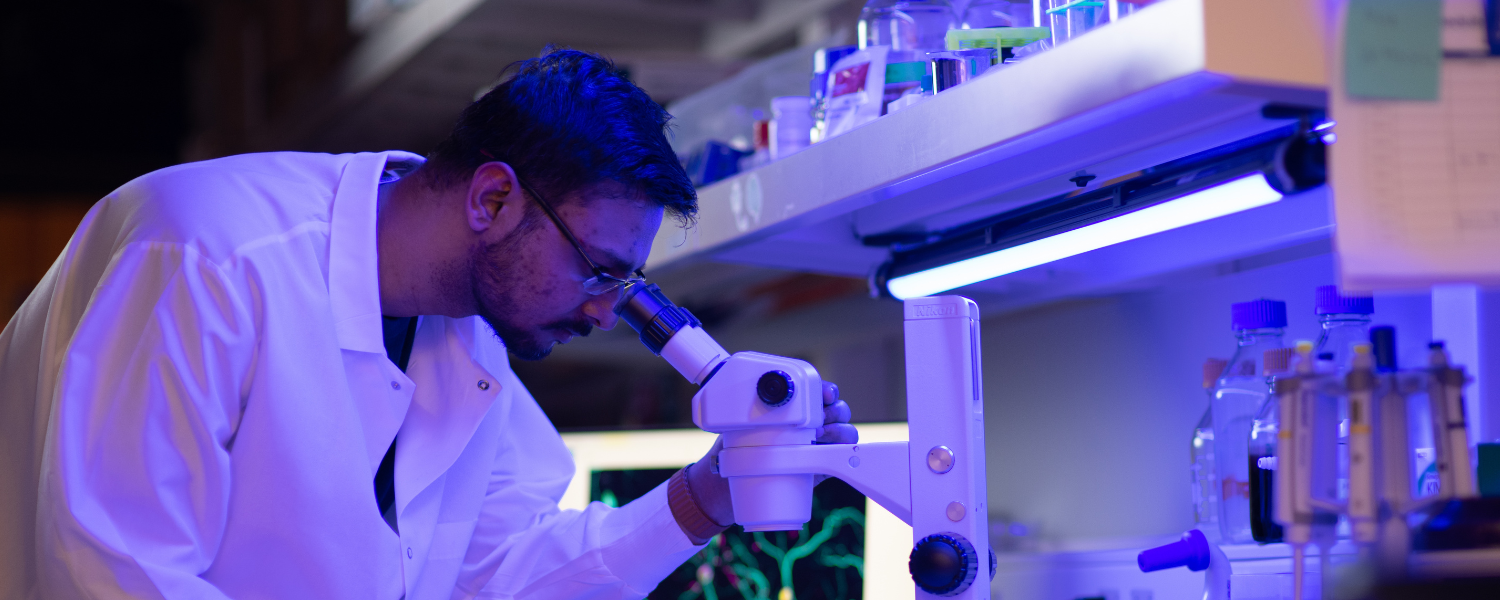
Parkinson’s disease is a complex neurodegenerative disorder that, over time, impairs the ability to move and affects a wide range of other non-movement-related functions.
For scientists, one of the biggest challenges to finding new treatments is understanding exactly how the disease develops and progresses. Research points toward one key route: the buildup of protein clumps called Lewy bodies. These clumps are a hallmark of Parkinson’s disease and are closely linked to problems with how nerve cells function. Reducing Lewy bodies may be a promising strategy for slowing disease progression.
Dr. Naman Vatsa, a postdoctoral fellow in the lab of Dr. Michael Henderson, works to understand how and why these proteins accumulate with the goal of contributing to improved treatment strategies. His research recently earned him a prestigious Collaborative Research Network (CRN) Discovery Fellowship from Aligning Science Across Parkinson’s (ASAP) and The Michael J. Fox Foundation for Parkinson’s Research (MJFF) to support his work.
In this Q&A, Vatsa shares more about his research, how the award will help drive his work forward and what his biggest motivator is as a researcher.
What is the big problem you’re working to solve with your project?
NV: Parkinson’s disease is characterized by the accumulation of alpha-synuclein proteins in the brain, which form clumps called Lewy bodies. Over time, Lewy bodies become more widespread, interfering with nerve cell function. This disruption can cause symptoms such as slowness, stiffness, tremors, loss of sense of smell and changes in mood. Current therapies help manage some of these symptoms, but there are no treatments that effectively slow or stop the underlying disease process.
A major challenge in the field is understanding which cellular pathways are involved and how they influence the formation, growth and spread of clumped alpha-synuclein throughout the brain. My research focuses on identifying and understanding these pathways and how they can be leveraged to reduce alpha-synuclein buildup.
By uncovering these processes, we aim to identify new therapeutic strategies that could slow disease progression and improve outcomes for people living with Parkinson’s disease and related neurodegenerative disorders.
Learn more about Parkinson’s disease research at VAI ➔
How will the Discovery Fellowship help?
NV: Recently, we identified a new group of proteins that help reduce alpha-synuclein buildup and protect neurons from degeneration — a key insight that may inform promising therapeutic targets in the future.
The Discovery Fellowship will help me better understand the role these new proteins play in the formation and progression of alpha-synuclein buildup, as well as identify when these pathways may be most effectively targeted.
What is the most exciting part of your research?
NV: What excites me most is that every day research brings the opportunity to learn and discover something new. Some of the most interesting discoveries come from following unexpected results and uncovering biological mechanisms that change how we think about disease and neurodegeneration. What makes this work especially rewarding is the possibility that discoveries made in the lab today could eventually contribute to better therapies and meaningful advances for people in the future.