
Can epigenetics help us understand Crohn’s disease?
February 12, 2026
For the millions of people worldwide with Crohn’s disease, the simple act of eating a meal can be a stressful experience.
Crohn’s is a type of inflammatory bowel disease characterized by severe irritation in the digestive tract. People with Crohn’s may experience pain, fatigue, diarrhea and malnutrition. These symptoms can be debilitating and, without proper management, even life threatening.1
Although we have treatments to reduce symptoms and promote healing of the intestines, there is no cure for Crohn’s.1 The reason? We still don’t know the exact causes of the disease.

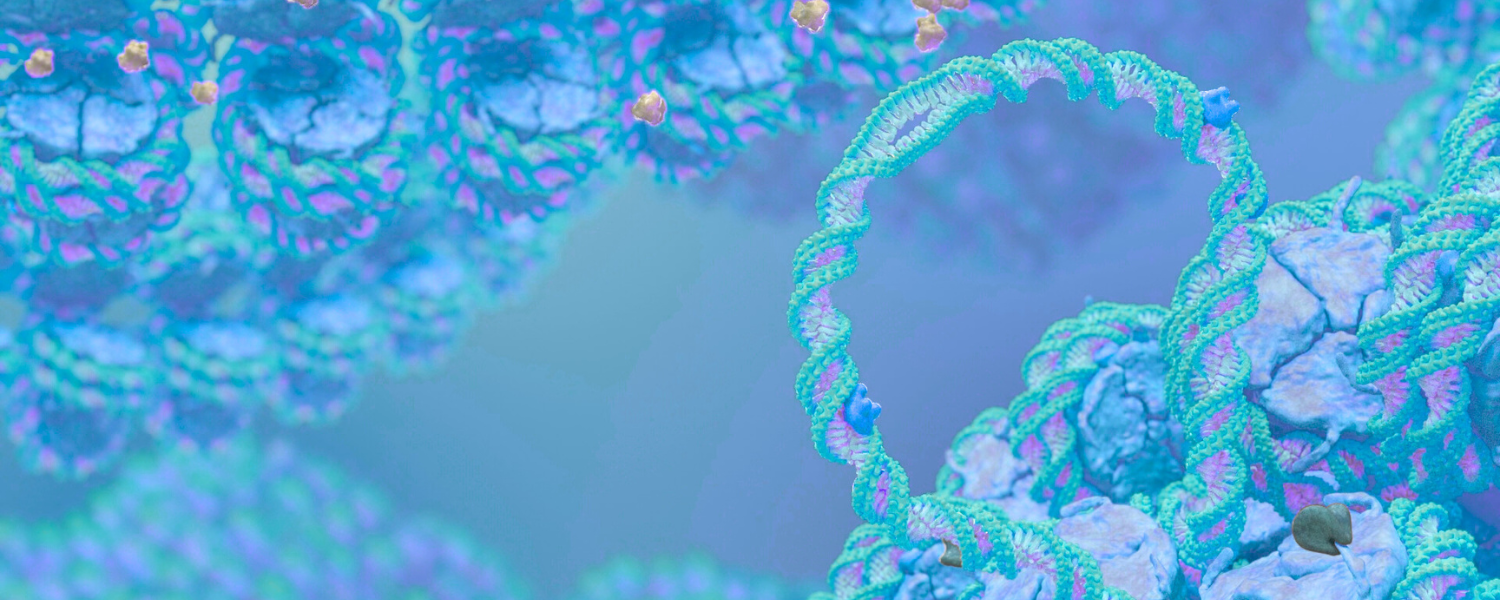
Van Andel Institute’s Dr. Peter W. Laird hopes to change that. The Institute was recently awarded a grant from The Leona M. and Harry B. Helmsley Charitable Trust for a project Dr. Laird will lead to investigate possible links between Crohn’s and epigenetics, a set of mechanisms that regulate how the instructions in DNA are used without changing the DNA itself.
“Genetics and the immune system likely play roles in Crohn’s, but these factors alone don’t explain the vast variability in disease onset, severity and progression,” Laird said. “There’s something else that affects disease risk, and we have evidence to suggest that it might be epigenetics.”
Laird’s approach is a relatively new one for Crohn’s research, in part because the tools required to precisely study epigenetics have only recently become available. These powerful technologies and techniques, several of which Laird developed or helped develop, are reshaping our understanding of how diseases arise. Importantly, they also are paving the way toward more effective treatments.
Learn more about research in the lab of Dr. Peter W. Laird ➔
You only need to look at cancer research to see the profound impact of epigenetics. For a long time, cancer was thought to be caused only by mutations, or changes to the DNA sequence itself. Over the past couple decades, however, research has revealed epigenetic errors also are primary drivers of cancer. Scientists now are leveraging these insights to develop new medications that target epigenetics to directly treat cancer or that support the immune system to more effectively fight malignant cells.
“We can directly apply lessons learned from cancer research to Crohn’s disease,” Laird said. “By the end of our study, we hope to have a fuller picture of the causes of Crohn’s, as well as some new opportunities to address the disease.”
In the early stages of their work, the Laird Lab will examine intestinal cells from people with Crohn’s. They’ll be searching for patterns of epigenetic marks on DNA called methylation, which determine whether the instructions in a gene are used or not. Problems with DNA methylation are known to contribute to disease — and Laird’s team hopes to uncover how variations in methylation might influence Crohn’s.
Explore VAI’s research areas ➔
This initial work will rely on scDEEP-mc, a new tool that allows scientists to study epigenetic changes in individual cells. The result is a high-resolution, efficient look at potential disease-related epigenetic changes across cells. scDEEP-mc was developed by the Laird Lab in collaboration with the lab of VAI’s Dr. Hui Shen.
“Advances in technology make this work possible,” Laird said. “I truly believe Crohn’s is a problem with a solution. We just need to find it and our work will help us get there.”
Frequently asked questions
What is epigenetics?
Virtually every cell in the human body — all 37 trillion of them — has the same DNA, which contain the instructions for life. But not all the instructions are needed in the same cells at the same time. For example, a muscle cell only needs to know how to be a muscle cell; it does not need to know how to be a skin cell or a bone cell.
Epigenetics ensure the right instructions are used at the right time by annotating DNA with special chemical markers (methyl groups). These markers help cells access the instructions they need while blocking access to instructions they don’t need. Learn more ➔
How are genetics and epigenetics related?
Genetics refers to instructions written in our DNA. Epigenetics refers to the way those instructions are used.
How is epigenetics linked to disease?
Epigenetics influence virtually every aspect of health. Epigenetic errors can cause genes that should be active to be silent or genes that should be silent to be active. In cancer, for example, epigenetic errors switch off genes that prevent damaged cells from replicating. This allows cancers to grow and spread.
Sources
1 Mayo Clinic. Dec. 4, 2025. Crohn’s disease. Accessed Jan. 15, 2026.